Speeches & Interviews
Filter by year
Filter by speaker
Search title in Speeches
Filter by year
Filter by speaker
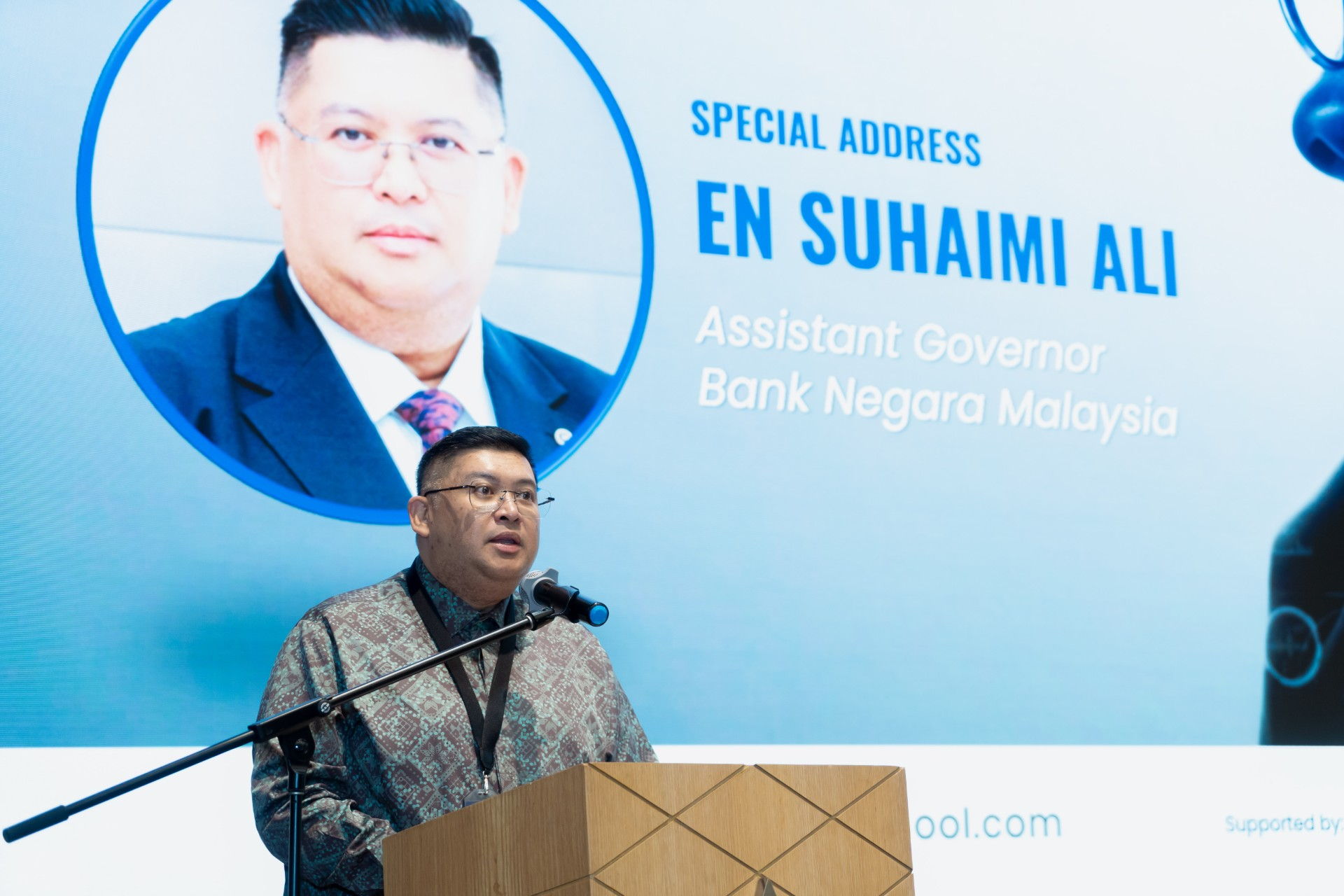
Speech by Assistant Governor Suhaimi Ali
at the Launch of Asian Banking School (ABS) Digitalisation Initiatives and ABSNEXLEARN Digital Learning Portal
Kuala Lumpur | 19 May 2026
There was a time when the strength of a financial institution was measured by the size of its branch network, the scale of its physical presence and the number of customers walking through its doors each day. Institutions competed through reach, scale and operational efficiency. Then, the world changed. The strongest institutions became those with the best systems, the fastest connectivity and the ability to digitise financial services at scale.
Today, we stand at the edge of another major transformation. But this time, the shift feels very different. Artificial intelligence is not simply changing the tools we use. It is beginning to reshape how decisions are made, how risks are assessed, how customers are served and even how knowledge itself is created and applied.
The financial sector has adapted through many waves of technological change before, from computerisation to internet banking, mobile banking and more recently, digital payments. But what makes this moment different is the speed and depth of the transformation taking place. Entire workflows are being redesigned in real time. Roles are evolving rapidly. Skills built over decades can now become outdated within just a few years. Many institutions are now facing a difficult reality. Technology is moving faster than traditional structures, talent development and ways of working can adapt to.
And perhaps that is the defining challenge of our time. Because in the future, the institutions that succeed may not necessarily be the largest, the oldest or even the most technologically advanced. They may simply be the ones that can learn, adapt and reinvent themselves faster than change itself.
Ladies and gentlemen,
When I reflect on what financial services looked like a few decades ago and compare it to what they are today, the difference is extraordinary. Banking used to be defined by paper forms, long queues and face-to-face interactions for almost every service. Today, customers can open accounts in minutes, make payments in seconds and receive financing decisions within hours, often without stepping into a branch. What once required buildings, counters and stacks of paperwork can now happen through a device that fits in the palm of our hands.
This progress is remarkable. It reflects years of innovation and transformation across the financial sector. But if the past decade was about digitisation, the next decade will be about adaptation. And perhaps the most important question facing the financial sector today is not whether technology will replace talent. The more important question is whether talent can evolve fast enough to keep pace with the speed of technological change.
Across the financial sector, artificial intelligence is increasingly being used to automate routine work, strengthen customer engagement, improve fraud detection and support decision-making. What we are witnessing is no longer a small or gradual change. It is a structural change. The nature of work itself is beginning to shift.
At Bank Negara Malaysia, our focus on digital transformation is not new. Under the Financial Sector Blueprint 2022–2026, digitalisation was identified as a key driver of a more inclusive, competitive and resilient financial system. Over the years, we have supported this agenda through initiatives such as migration to e-payments, digital bank licensing, Open Finance, asset tokenisation, enhancements to our regulatory sandbox and more recently, the publication of our Discussion Paper on Artificial Intelligence. Our objective has always been clear. To create an environment where innovation can grow responsibly, while preserving trust, resilience and stability within the financial system.
But, ladies and gentlemen, digital transformation is not ultimately defined by technology. It is defined by people.
As the financial sector becomes more digital, human judgement becomes even more important. Technology alone has never transformed an institution. People do. The future strength of our financial sector will depend not only on how advanced our technology becomes, but on whether our people are ready for what comes next.
That is why initiatives like ABSNEXLEARN matter so deeply. Learning can no longer be treated as something occasional. It cannot simply be a programme we attend once or twice a year before returning to business as usual.
Learning can no longer be an event. It must become instinct. Continuous learning. Continuous adaptation. Continuous reinvention. These must become part of how institutions think, operate and lead.
This is what makes ABS’s Digital Transformation Initiative both timely and important. The integration of technologies such as Generative AI, Quantum AI, Extended Reality and advanced learning analytics is becoming increasingly critical and has the potential to reshape how financial sector professionals learn, grow and prepare themselves for the future.
Because even as technology becomes more powerful, certain human qualities will become even more valuable. Judgement. Integrity. Wisdom. Empathy. The courage to make difficult decisions during moments of uncertainty. And above all, the ability to earn trust.
Because finance has never merely been about money. It is fundamentally about confidence. It is about individuals, businesses and communities placing their hopes, livelihoods and futures in institutions that they believe will act responsibly. And that trust cannot simply be automated.
Algorithms may optimise decisions. Machines may process information at extraordinary speed. Artificial intelligence may increasingly support decision-making across the financial sector. But no technology can replace moral responsibility. No machine can replace accountability. And no system can substitute leadership during difficult moments. In many ways, the more technology advances, the more important it becomes for institutions to remain deeply human.
Ladies and gentlemen,
Building a future-ready workforce cannot be the responsibility of any single institution alone. It requires collaboration across the ecosystem between financial institutions, learning institutions, policymakers, industry bodies and talent development partners.
And this is precisely why today’s initiative matters. It reflects ABS’s leadership in shaping the next phase of digital learning and workforce development, while bringing together the wider ecosystem to invest collectively in future-ready capabilities.
Because ultimately, the organisations that will thrive in the future will be those willing to rethink how they operate, how they develop talent and how they build cultures that embrace continuous reinvention. That requires courage! Because transformation is uncomfortable. It challenges habits, disrupts familiar ways of working and forces institutions to confront difficult truths about their own readiness for the future. But history teaches us something important. The institutions that endure are rarely the ones that resist change the longest. They are usually the ones willing to evolve before circumstances force them to.
So my hope today is that ABSNEXLEARN becomes more than just a learning portal. I hope it becomes a platform that inspires curiosity, encourages reinvention and reminds all of us that learning must never stop. Because ultimately, the greatest divide in the future may not be between large institutions and small institutions, nor between digital institutions and traditional institutions. It may simply be between those willing to learn and those who are not. And perhaps that is the real challenge before all of us today. Not whether change is coming. But whether we are prepared to lead through it.
On that note, let me congratulate the leadership and team of the Asian Banking School for their vision and commitment in driving this important initiative forward. May this transformation journey help shape a generation of financial sector professionals who are not only technologically capable, but also principled, thoughtful and worthy of the trust society places in them.
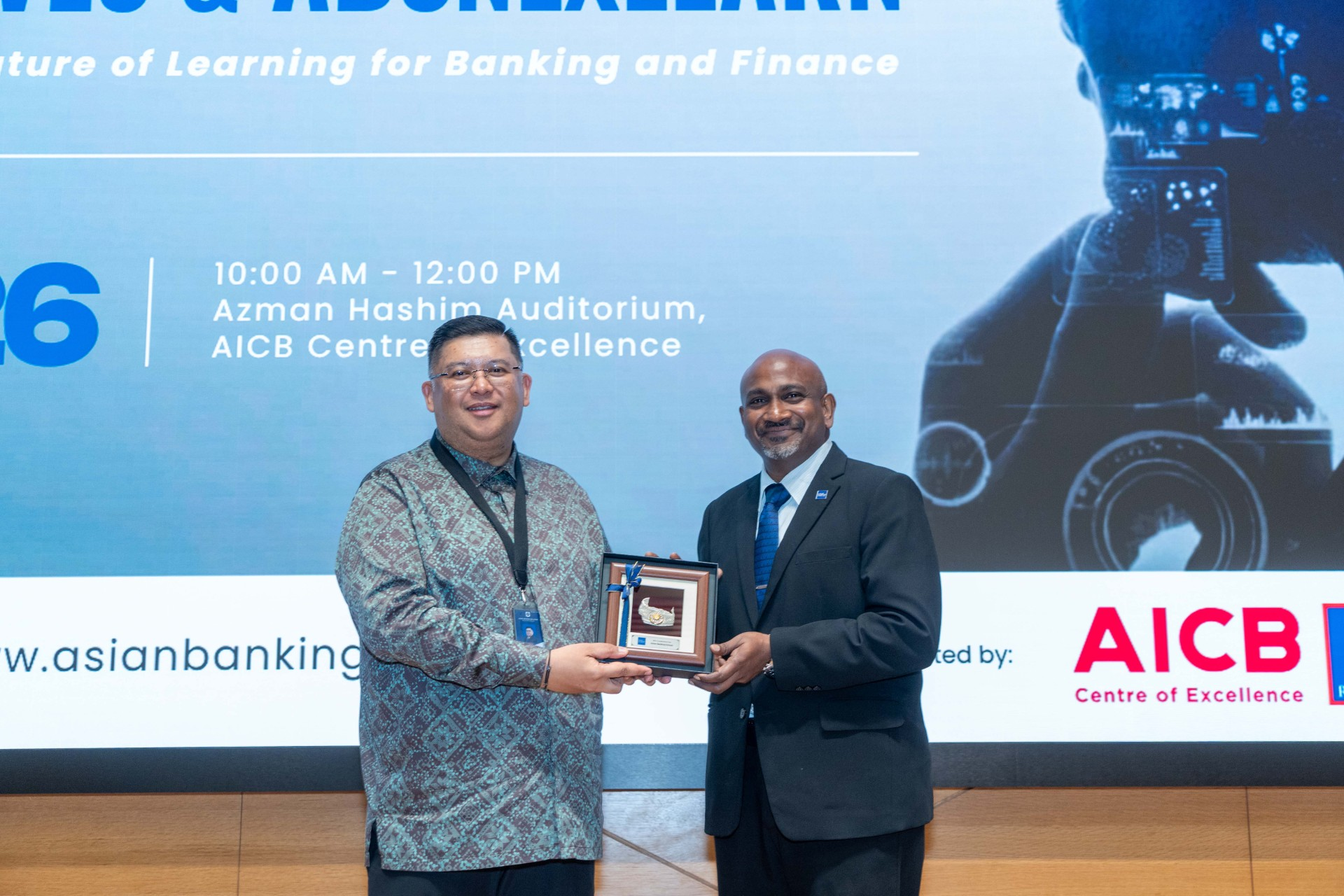
With that, it is my pleasure to officially launch the Asian Banking School Digital Transformation Initiative and ABSNEXLEARN.
Thank you.
Bank Negara Malaysia
19 May 2026

