Speeches & Interviews
Filter by year
Filter by speaker
Search title in Speeches
Filter by year
Filter by speaker
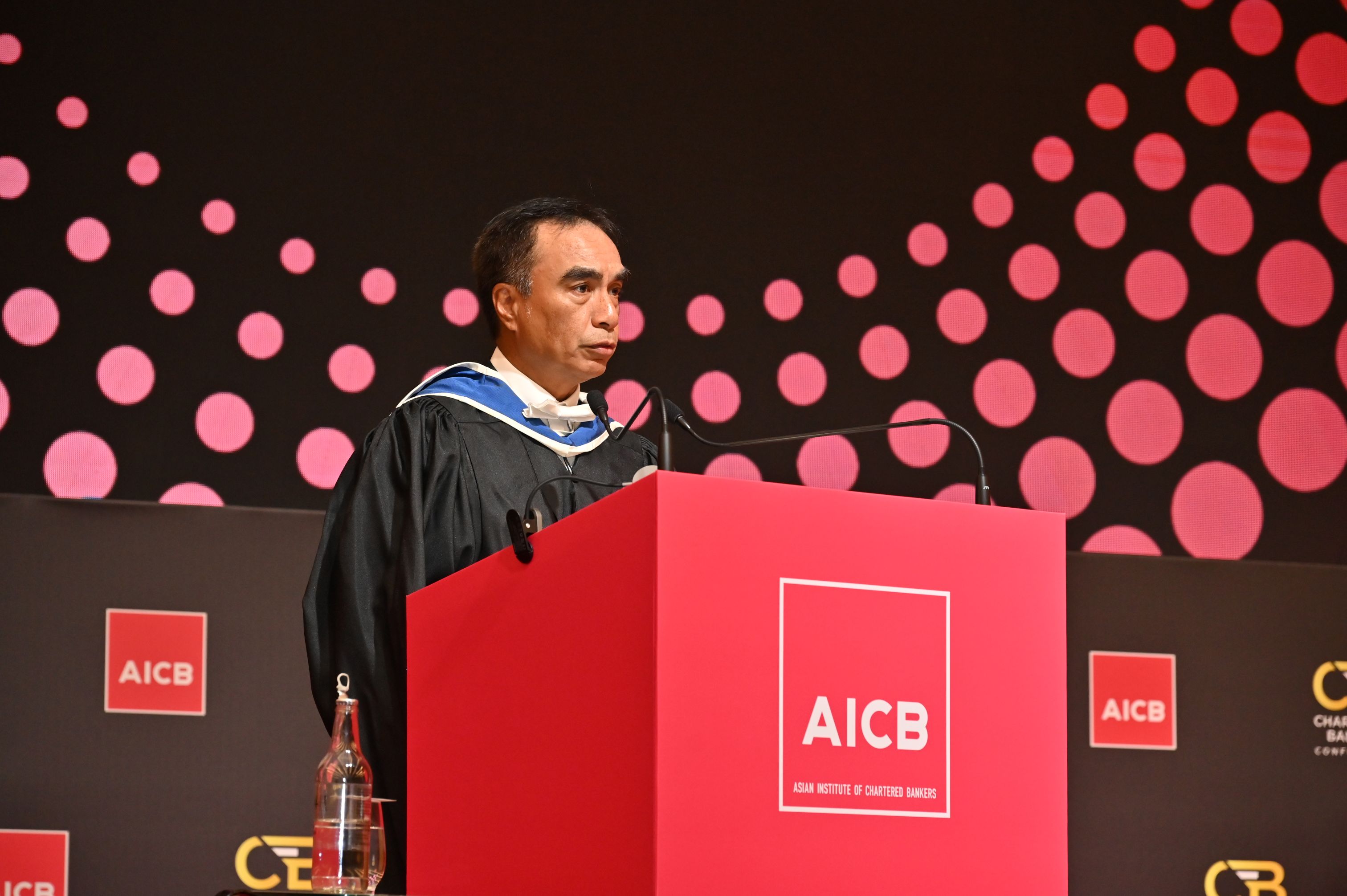
Special Address by Deputy Governor Adnan Zaylani Mohamad Zahid
at the Asian Institute of Chartered Bankers
9th Chartered Banker Conferment Ceremony
Kuala Lumpur | 16 May 2026
I am honoured to join you again, on this occasion which celebrates professionalism, dedication and an unwavering pursuit of excellence within the banking community. My warmest congratulations to all recipients of awards and distinctions today.
As we honour your achievements, it is worth reminding of the raised expectations of professional excellence expected of you in the financial sector. The Chartered Banker designation goes beyond a title or acronym - it symbolises a profound commitment to sound banking practices, ethical conduct and prudent judgement. Above all, it reflects the role of bankers as stewards of trust and values – principles that form the cornerstone of a resilient and forward-looking banking system in Malaysia.
Ladies and gentlemen,
We are living in volatile and uncertain times. Having only come out of the COVID‑19 pandemic, we faced and continue to face lingering uncertainties surrounding trade tariffs, and more recently - geopolitical tensions, war in the Middle East and energy market volatility. These forces have tested and continue to test the resilience of economies and financial systems worldwide.
Despite these challenges, Malaysia’s economy has continued to demonstrate resilience. In the first quarter of 2026, the Malaysian economy recorded a strong growth of 5.4%. This was supported by sustained household spending, resilient investment activities, and continued export growth supported by E&E exports and ICT- related services. This momentum was also supported by positive labour market conditions, alongside a further decline in unemployment rate to 2.9% in March. Importantly, the Malaysian economy enters this period of uncertainty, including risks from the ongoing conflict in the Middle East, from as strong a position in many years, as reflected by these data points.
Nevertheless, we must not be complacent. Our resilience also hinges on our financial sector being a stabilising force for the economy. For us here, that means continuing to support businesses, households, economic and investment activities as a whole. This is hardly the time to raise our conservatism, review and reduce credit lines or financing, especially to your own hard-won customers. Instead, this is the time for us to raise our game, be proactive in partnering with businesses in weathering through these challenging times. This is the time to show that banks, and bankers are trusted and reliable partners, through thick and thin.
Against this backdrop, the banking sector is undergoing a profound transformation. While we are seeing and living through another business cycle, we are also in the midst of a structural rewiring of the global economy. We stand at the crossroads of megatrends which are reshaping how banking functions and what it takes to be in the profession. Two years ago at this very event, I highlighted how skills disruption, technological change and evolving business models were already transforming what banks require of their people. If anything, those observations have proven even more relevant today.
The rise of artificial intelligence (AI), digital assets and currencies and blockchain are revolutionising and challenging traditional banking models. In parallel, evolving customer expectations and demographics demand greater transparency, personalisation and convenience. Equally important is the growing emphasis on sustainability, which is shaping strategies to create long-term value for society and the environment.
AI has emerged as one of the most significant breakthroughs in recent times, transitioning swiftly from experimentation to widespread adoption. Today, approximately 81%[1] of the financial services ecosystem globally are already engaging with AI in some form. From back‑office automation and enhanced decision support to front‑office customer engagement, advisory and sales, AI is reshaping how banks operate across the entire value chain. While these advancements bring efficiency, they also carry profound implications for the workforce.
Let me elaborate on this further:
At the same time, the survey highlights growing talent shortages in critical areas such as Cybersecurity Threat Intelligence, Data Science, Risk and Control Management, Regulatory Compliance, and Sustainability Strategy, with over 87% of FIs indicating upskilling and reskilling as a key business priority to close skills gaps. The strong emphasis on skills transformation corroborates with global trends, where the World Economic Forum’s Future of Jobs Report 2025[2] estimates that nearly 59% of workers will need upskilling by 2030, with technology-driven roles and green transition-related occupations expected to see the fastest growth.
These developments underscore a fundamental reality. The pace of change has accelerated, expectations of banks have broadened, and the demands placed on banking professionals have continued to evolve. In an age of artificial intelligence, human judgement and wisdom becomes even more valuable, not less.
Ladies and gentlemen,
A Chartered Banker goes beyond a professional banking qualification. I believe it is also a calling, to be a good banker. What is a good banker? Some would question whether they exist or can exist at all. Be that as it may, what defined a good banker in the past may no longer be enough today. In the past, a good banker may have been someone who excelled in managing transactions, assessing credit risk, maintaining good customer relationships, acted with integrity, with strong community relations and solid skillsets. At least, this is the help I got from AI. These certainly ring true and remain important, but they are no longer enough on their own.
Today, being a good banker means much more. It requires the ability to adapt to rapid change, embrace technology advances and continuously upgrade skills. These qualities must be anchored with a forward-looking mindset, underpinned by strong ethical standards and sound judgement. Such shifts in requirements are not temporary or cyclical. They represent fundamental recalibrations that is necessary which will help shape the future course of the sector and the broader economy. In the period ahead, success will hinge on developing talent and capabilities beyond traditional technical expertise, cultivating adaptability, sound judgment, and a broader perspective on risk, governance, and long‑term value creation.
On that note, I would like to commend the various industry‑led initiatives that have been put in place to future‑proof our financial sector workforce. A notable one is the Future Skills Framework, or FSF which provides a structured, sector‑specific reference to guide capacity building, identify in‑demand skills and address evolving capability requirements. Complementing this, the FSF Xcel introduced last year enables financial institutions to assess workforce capabilities, identify skills gaps and translate those insights into targeted learning and clearer career pathways. More than just a diagnostic tool, the FSF should be embraced as a collective commitment across the industry to foster continuous learning and cultivate future-ready capabilities in a coordinated and disciplined manner.
At the broader level, the Future Skills Talent Council (FSTC) led by TalentCorp and various industry networking groups each play a pivotal role in fostering continuous dialogue on emerging skills requirements and help to align sector‑wide demand with the evolving needs of the talent pipeline.
It is encouraging to witness the industry championing these talent development initiatives, supported by a growing ecosystem of learning and development enablers. I urge the industry to continue leveraging these platforms and to remain firmly invested in collective workforce transformation. Talent development should not be viewed as a peripheral agenda, but as a strategic imperative that will shape the strength and resilience of our financial sector in the years ahead.
Looking ahead, the role of bankers must also evolve beyond traditional financing to become enablers of growth. The role of banks is not just as financial intermediaries but also strategic enablers of economic transformation. As the operating landscape shifts, economic and industry growth is increasingly accompanied by complex and interconnected risks, placing greater demand on judgement, contextual understanding and forward-looking risk assessments.
Meeting these demands requires more than sector‑specific technical expertise. It calls for stronger strategic thinking, deeper appreciation of emerging risks, and more robust risk management capabilities. In supporting and facilitating our economic transformation, banks can and should play a central role in aligning their strategies and capabilities with national priorities such as the New Energy Transition Roadmap (NETR) and the New Industrial Master Plan 2030 (NIMP 2030). Banks can play a catalytic role in advancing Malaysia’s long‑term prosperity by directing financing towards transition‑enabling and high‑value investments, particularly in new growth areas such as renewable energy, advanced manufacturing and technology‑driven activities.
In this context, the recently launched Financing Sectoral Engagement (FSE) in March illustrates that financing today must go beyond the provision of capital. Banks need to increasingly position themselves as strategic partners, engaging more deeply with businesses to understand operating realities, assess risks more holistically and support long-term growth ambitions. On this note, I would like to extend my appreciation to the industry associations, ABM, AIBIM and ADFIM who have been instrumental in mobilising deeper engagements with member banks. The E&E sector was identified as the inaugural focus, given its strategic importance under the National Semiconductor Strategy, NIMP 2030 and the 13th Malaysia Plan. That said, further engagements will be progressively extended to other sectors such as shipping, aerospace, automotive, and green energy in subsequent phases. The FSE initiative will hopefully realise the growing expectation for banks to offer more than just financial products, but to actively collaborate, provide insights and offer bespoke financial solutions which align with business needs and sustainable growth objectives.
Consistent with this, the upcoming Financial Sector Blueprint is being carefully crafted to support a more dynamic, complex and resilient Malaysian economy. Achieving this vision will hinge on a well-functioning ecosystem that promotes collaboration and innovation across the sector. I call for a whole-of-sector approach, where every participant – banks, regulators, educators, industry associations, and the wider community embraces their respective roles and responsibilities, including in advancing talent development to support Malaysia’s economic transformation.
As I bring my remarks to a close, I wish to emphasise that the strength and resilience of the financial system rest not only on institutions, frameworks and capital, but fundamentally on the people behind them. The Bank remains ever ready to support initiatives that strengthen the talent ecosystem and uplift professional standards across the sector.
On that note, let me once again commend the industry, and especially to today’s conferees for your continued commitment to professionalism and lifelong learning.
Bank Negara Malaysia
16 May 2026
[1] The 2026 Global AI in Financial Services Report: Adoption, impact and risks. Cambridge Centre for Alternative Finance, University of Cambridge
[2] World Economic Forum. Future of Jobs Report 2025. Key Findings on LinkedIn
