Speeches & Interviews
Filter by year
Filter by speaker
Search title in Speeches
Filter by year
Filter by speaker
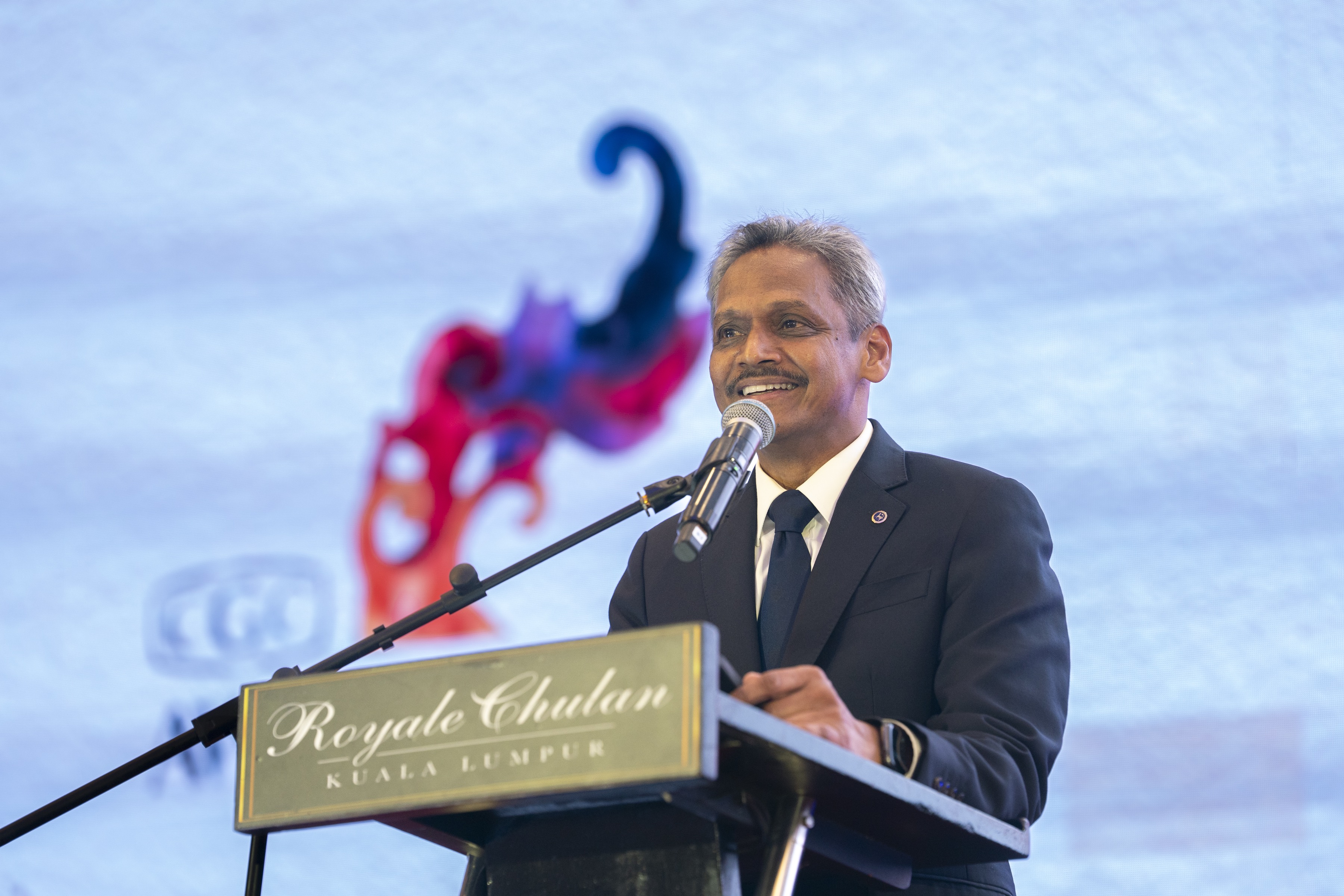
Special Address by Governor Abdul Rasheed Ghaffour
at the 31st CGC Awards
Kuala Lumpur | 11 August 2026
Hearing Dato’ Mohammed Hussein’s remarks on the Gelam tree, and its remarkable ability to adapt and thrive, reminded me of my keynote address at the Sasana Symposium three weeks ago. I am pleased to see that Gelam has now become glam. In that same spirit, I will touch today on how adaptation can help our SMEs build resilience and thrive amid change.
It is a pleasure to join you this evening at the 31st CGC Awards. Today, we will also launch the BNM–CGC Guarantee Scheme. Thank you CGC for your dedication in supporting viable Malaysian businesses. Your commitment helps businesses to overcome financing barriers, allows them to build resilience and helps them realise their potential.
To award recipients – my warmest congratulations. You have demonstrated not only business success, but also resilience; discipline; and sound financial stewardship. To the financial institutions and non-bank partners recognised today, you have demonstrated what responsible financing looks like:
The achievements we celebrate today remind us that success rarely comes when we stand still, but from how we adapt and how we move forward.
We meet at an important juncture. Businesses today are operating in an environment shaped by geopolitical uncertainty; rapid technological change; and an environment that is increasingly prone to frequent climate-related disruptions. For SMEs, these shifts are not distant global trends. They affect your input costs; they alter your supply chains; they change your customer behaviour and demand; and more importantly they require higher capabilities to compete.
Malaysia enters this period from a position of strength. The economy grew by 5.4% in the first quarter of 2026, supported by resilient domestic demand; by sustained investment activity and with a sound financial system. Labour market conditions remained favourable, with unemployment declining to 2.9%, while headline inflation remained moderate at 1.6% Nevertheless, the external environment remains uncertain and continuously evolving.
Central to Malaysia’s growth story is our SMEs. They account for about 40% of gross domestic product, and for almost half of total employment. Not only that:
As Malaysia advances towards a more productive, competitive and sustainable economy, SMEs role becomes even more important in driving that transformation.
From BNM’s perspective, overall financing conditions remain supportive. Banks and DFIs continue to provide financing to viable businesses, while CGC plays an important complementary role. Since its establishment, CGC has facilitated more than RM103 billion in guarantees and financing to more than 544,000 SMEs. That is a significant achievement.
But aggregate figures do not tell the whole story. Many SMEs continue to face higher input costs, tighter margins, supply-chain disruptions and slower customer payments. These have increased working capital pressures and tested business resilience.
To address immediate cash-flow pressures, Bank Negara Malaysia worked with the financial industry, and CGC, to establish the RM5 billion SME Stabilisation Relief Facility. We know that during periods of disruption, targeted relief measures help viable businesses navigate temporary cash-flow pressures. Such support remains important. However, temporary relief cannot be the long-term answer to recurring shocks. Businesses must continue to adapt; strengthen capabilities; and improve productivity, while financing evolves alongside them.
The question is not as simple as whether financing is available. The more important question is whether financing is evolving. Is it keeping pace with the changing needs? Is it adjusting to changes in business models and reflecting risk profiles of SMEs?
While financing opportunities are available within the system, some viable SMEs still struggle to access it because their potential is not readily captured by conventional credit assessments.
A young enterprise may have less credit history. An asset-light business may have limited collateral. Yet both may have strong cash flows, credible prospects or a sound order book. These businesses are not necessarily unviable. They may simply be less viable through a traditional credit-assessment lens and this is where guarantees and risk-sharing can make a meaningful difference.
A well-designed guarantee does not remove risk. Nor does it weaken credit standards. Its value lies in enabling risk to be shared more effectively, while preserving the responsibility of financial institutions. Of course this does not remove the importance of sound credit assessments, monitoring customers progress and intervening early when difficulties arise.
The true value of a guarantee is not measured simply by the amount of financing it supports. Its true value is whether the guarantee enabled financing to reach viable businesses, that would otherwise have been declined; or allow financing to be provided on terms that are better suited to business needs.
It is against this backdrop that we are launching the RM10 billion BNM–CGC Guarantee Scheme. The Scheme marks a shift towards a more scalable, and market-based approach to risk-sharing. It is designed to support microenterprises, start-ups and firms investing in sustainability, innovation, strategic sectors, food security and external resilience.
Beyond this Scheme, Bank Negara Malaysia is also working with CGC and Syarikat Jaminan Pembiayaan Perniagaan. With technical support from the World Bank, we want to strengthen Malaysia’s broader credit guarantee framework. The aim is to ensure that guarantees are better coordinated. They should be more effectively targeted; supported by stronger data; and financially sustainable over time. Our objective is not simply to provide more guarantees. It is to improve how guarantees are designed, targeted and evaluated.
Three weeks ago at the Sasana Symposium, I spoke about resilience through renewal and adaptation. The same principle applies to SME financing. As businesses evolve, the way we identify, assess and support them must evolve as well. Let me highlight three areas where further progress will be critical.
First, we must widen the financing frontier. Financial institutions must be prepared to reach beyond familiar businesses; conventional collateral; and established sectors. As Malaysia advances up the value chain, financing must play its role well. It must support activities that drive innovation; productivity; and value creation. This includes opportunities from the climate transition; research and development; prototyping; process innovation; and technology that is often less understood and therefore less financed. Guarantees can give financial institutions greater confidence to build expertise and develop appropriate solutions for these firms.
Second, we must assess businesses in totality. Collateral and financial statements are important. However, they cannot be the only lens through which viability is considered. Cash flows; transaction records; electronic invoices; payment behaviour; and supply-chain information – all these can provide a richer understanding of how businesses operate and create value. Used responsibly, data analytics can support a more complete assessment of thin-file, asset-light and innovation-driven businesses. They should complement, not replace sound judgement and prudent underwriting. Similarly, guarantees should support more informed risk-taking but they are not a substitute for sound credit underwriting.
Third, financing and capability-building must go hand-in-hand. Access to financing is important, but long-term SME success also depends on productivity, management strength, technology adoption and access to new markets. Finance may relieve an immediate constraint, but it may not transform the business in the long-term. This is why platforms such as imSME and MyKNP remain important. They help businesses improve financing readiness. They also help identify suitable solutions to strengthen financial, digital and market-access capabilities.
Malaysia needs more SMEs that can evolve into stronger mid-tier companies. We want SMEs to anchor domestic supply chains. We want SMEs that can compete internationally and we want SMEs that contribute meaningfully to the nation’s economic transformation. Guarantees can serve as a bridge – helping viable businesses build their track record, confidence and capability – to move into the mainstream of Malaysia’s financing ecosystem.
As we launch this Scheme, our ambition is not simply to support more financing. It is to support stronger businesses. Stronger businesses that invest; stronger businesses that innovate; stronger businesses that can enter new markets; and more importantly, stronger businesses that ultimately stand on merit.
To our SMEs, continue investing in your productivity, capability and resilience. To our financial institutions and ecosystem partners, use this Scheme to support viable businesses with the potential to grow and transform. But do so responsibly, and “risk-sharing must not become risk transfer”.
If we succeed, the RM10 billion Guarantee Scheme will be measured not only by the financing it enables, but by the businesses it transforms – to become more innovative, competitive, resilient and contribute meaningfully to the economy.
Thank you.