Economic and Financial Developments in Malaysia in the Second Quarter of 2026
Embargo : For immediate release Not for publication or broadcast before 1200 on Friday, 14 August 202614 Aug 2026
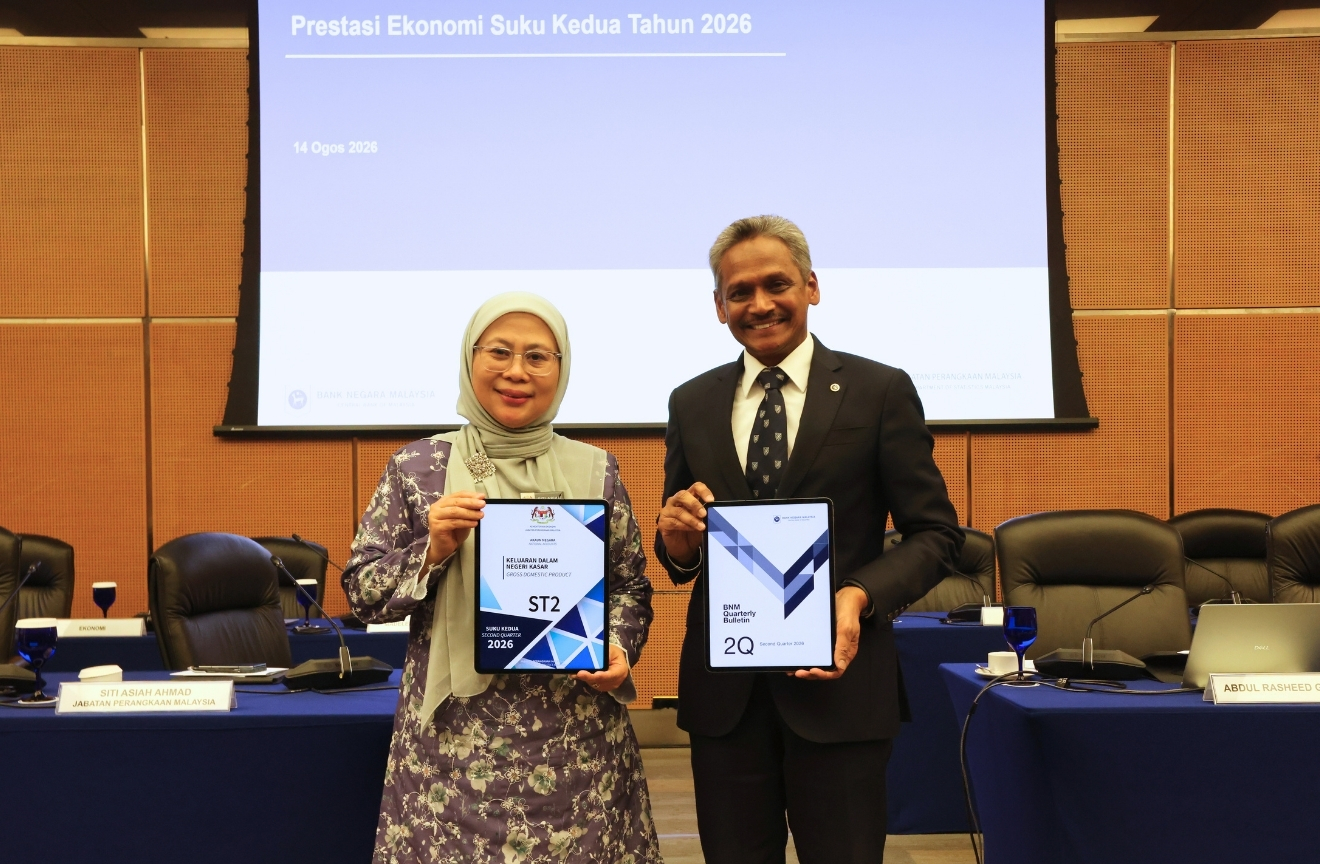
The Malaysian economy grew by 6% in the second quarter of 2026
Economic growth strengthened to 6% in the second quarter of 2026 (1Q 2026: 5.4%), driven by continued domestic demand and robust exports. Household spending was supported by steady income growth and ongoing policy support. Investment growth was underpinned by continued spending on structures and machinery & equipment. On the external front, exports accelerated, driven mainly by the continued strength in electrical & electronics (E&E) products and sustained expansion in services, as well as the rebound in exports of liquefied natural gas (LNG) and non-E&E manufacturing products. Gross imports expanded further amid robust growth in intermediate and consumer goods imports.
On the supply side, growth was underpinned by the expansion in services and manufacturing sectors. The higher growth in the services sector was supported by business-related subsectors, especially the information and communication technology (ICT) subsector from the expanding operationalisation of data centres. The robust growth in the manufacturing sector was driven by export-oriented clusters, particularly in E&E following strong artificial intelligence (AI)-related demand. The mining and quarrying sector growth turned positive, reflecting stronger natural gas production. On a quarter-on-quarter seasonally adjusted basis, the economy expanded by 2.5% (1Q 2026: -0.03%).
Headline inflation increased amid moderating core inflation during the quarter
Headline inflation increased to 1.9% (1Q 2026: 1.6%) while core inflation moderated to 1.9% (1Q 2026: 2.1%). The increase in headline inflation mainly reflected higher external cost pressures following the conflict in the Middle East. Fuel prices, particularly RON97 and diesel, increased during the quarter, leading to higher fuel inflation (5%; 1Q 2026: -1.5%). Although producer cost pressures increased, these remained concentrated at the upstream stage, with limited pass-through to later stages of production and broader consumer prices during the quarter. Meanwhile, core inflation eased mainly due to softer inflation in jewellery and watches (23.7%; 1Q 2026: 39.1%) and rent (1.4%;1Q 2026: 1.6%). Inflation pervasiveness, measured by the share of Consumer Price Index (CPI) items registering monthly price increases, rose to 45.5% during the quarter (1Q 2026: 38.3%), close to its historical average of 45.6%, driven mainly by a sharp increase in April before moderating in May and June.
Ringgit remained broadly stable against currencies of major trading partners in the second quarter of 2026
The nominal effective exchange rate (NEER) (2Q 2026: -0.8%; 1Q 2026: +1.4%) remained broadly stable amid evolving global financial conditions, particularly the shift in market expectations regarding the direction of US monetary policy.
The ringgit continued to be supported by Malaysia’s strong domestic fundamentals and sustained growth momentum. On a year-to-date basis (as at 12 August 2026), the ringgit recorded a relatively stable performance against the US dollar (-0.9%) and the currencies of major trading partners (NEER: -1%).
Moving forward, while external factors will continue to drive exchange rate movements, Malaysia’s firm economic prospects and ongoing structural reforms are expected to provide enduring support to the ringgit. Bank Negara Malaysia (BNM) will closely monitor global developments and remains committed to ensuring the orderly functioning of the domestic foreign exchange market.
Credit growth was driven by expansion in both outstanding corporate bonds and business loans
Financing remained available to support economic activity and business needs. Credit to the private non-financial sector grew by 6.4% during the second quarter of 2026 (1Q 2026: 5.6%). Outstanding corporate bonds expanded by 8.1% (1Q 2026: 5.9%). It reflected higher bond issuances, mainly in the utilities sector and for working capital purposes. Similarly, outstanding business loans grew by 7.2% (1Q 2026: 5.7%) across both working capital and investment-related purposes. By segment, the growth was driven mainly by loans to non-small and medium enterprises (SME). Meanwhile, SME loans grew by 4.2% (1Q 2026: 5.2%) amid sustained demand for working capital. For households, loans expanded by 5.3% (1Q 2026: 5.4%) amid stable loan growth for the purchase of houses.
Financial institutions continue to support SMEs facing temporary financial difficulties. Repayment assistance, financing restructuring and tailored advisory services remain available to affected SMEs. They may also obtain assistance through the Small Debt Resolution Scheme administered by Agensi Kaunseling dan Pengurusan Kredit (AKPK). Targeted support is also available for viable SMEs affected by disruptions arising from the conflict in the Middle East via the SME Stabilisation Relief Facility (SME SRF). As of 7 August 2026, RM2.8 billion in financing has been approved, benefiting more than 4,900 SME accounts. In addition, SMEs can make use of the RM10 billion BNM-CGC Guarantee Scheme to strengthen resilience and competitiveness for the future.
Malaysia’s economy continues to demonstrate resilience despite external uncertainties, supported by its strong economic fundamentals
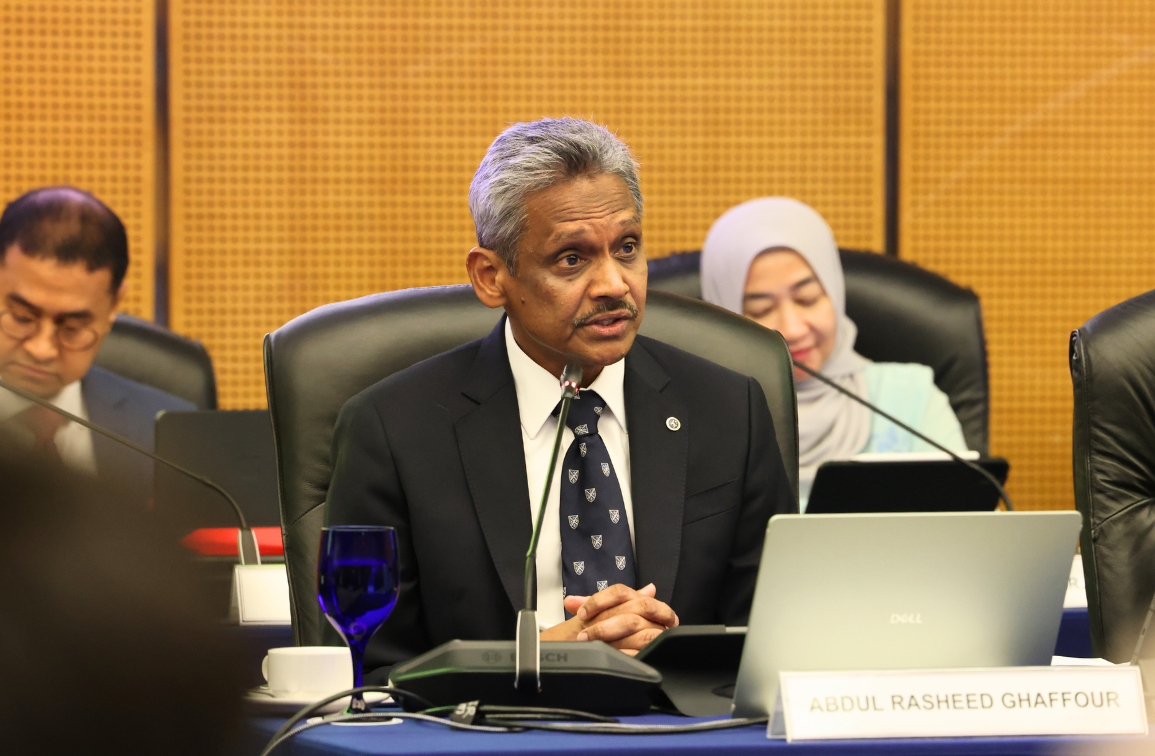
Bank Negara Malaysia Governor Dato’ Sri Abdul Rasheed Ghaffour says, ‘The Malaysian economy remains on a firm footing. Growth in 2026 is projected to remain within the forecast range of 4–5%, with recent developments indicating that overall growth could be around 5%. While the outlook continues to be shaped by external developments, Malaysia is well-positioned to navigate these challenges from a position of strength and policy readiness.’
On the domestic front, household spending will benefit from continued income growth as well as ongoing policy measures. Meanwhile, investment activity will be driven by the progress of multi-year projects in both the private and public sectors, continued high realisation of approved investments as well as the ongoing implementation of national master plans. On the external front, export growth will be underpinned by sustained demand for E&E products amid growing investment in AI-related activities and global technology expansion. Additional support is expected from the rebound in non-E&E exports, alongside sustained tourist spending and expansion in ICT services exports.
Inflation is expected to remain moderate in 2026, amid evolving external cost conditions
Headline inflation is projected to average between 1.5–2.5% in 2026. Recent inflation outturns and high-frequency indicators continue to point to modest consumer price increases. While external cost pressures arising from the Middle East conflict may exert some upward pressure on prices going forward, the overall impact on inflation for 2026 is expected to remain contained. In particular, domestic policy measures such as targeted fuel subsidies, together with stable demand conditions, are expected to help limit the pass-through of higher global costs to domestic prices.
See also:
Bank Negara Malaysia
14 August 2026
© Bank Negara Malaysia, 2026. All rights reserved.
