Economic and Financial Developments in Malaysia in the Third Quarter of 2026
Embargo : For immediate release Not for publication or broadcast before 1200 on Wednesday, 18 November 202618 Nov 2026
The Malaysian economy advanced by 5.5% in the third quarter of 2026
The economy grew by 5.5% in the third quarter of 2026 (2Q 2026: 6%), driven by strong export performance and continued expansion in domestic demand. Export growth strengthened further, driven by tech-related exports across both electrical & electronics (E&E) and non-E&E products. On the domestic front, household spending was supported by favourable labour market conditions and steady income growth. Nevertheless, the growth moderated reflecting base effect from higher cash transfers in the third quarter of 2025. Investment growth was underpinned by robust spending on structures and machinery & equipment.
On the supply side, growth was supported by continued strong performance in the manufacturing and services sectors. Growth in the services sector was driven by stronger business services growth. Activity in the manufacturing sector accelerated largely due to strong global AI-related demand for tech-related products. Growth in the agriculture sector strengthened as palm oil yields improved across regions. In contrast, the mining and quarrying sector recorded a contraction following lower oil and natural gas production due to scheduled maintenance activities. On a quarter-on-quarter seasonally adjusted basis, the economy grew by 1.5% (2Q 2026: 2.5%).
Headline and core inflation remained stable during the quarter
Headline inflation remained stable at 1.9% (2Q 2026: 1.9%), while core inflation moderated to 1.7% (2Q 2026: 1.9%). Upward pressure on headline inflation was mainly driven by higher electricity charges (2%; 2Q 2026: -3.7%) following higher Automatic Fuel Adjustment (AFA) surcharges during the quarter. This was largely offset by lower fuel inflation (1.8%; 2Q 2026: 4.7%) following the introduction of subsidised diesel under the BUDI Diesel programme in July 2026.[1] Meanwhile, core inflation eased, mainly reflecting item-specific factors, including base effects.
Inflation pervasiveness, measured by the share of Consumer Price Index (CPI) items registering monthly price increases, rose to 48.3% during the quarter (2Q 2026: 45.5%), above its historical average of 45.6%. Pervasiveness rose notably in July, partly reflecting seasonal and item-specific (idiosyncratic) factors, before moderating in August and September.
Ringgit remained stable against currencies of major trading partners
The ringgit remained stable against the US dollar (3Q 2026: -0.2%; 2Q 2026: -0.8%). On a year-to-date basis as of 16 November 2026, the ringgit recorded a relatively stable performance against the US dollar (-0.8%) and the currencies of major trading partners (Nominal Effective Exchange Rate, NEER: -0.5%).
The ringgit continued to be supported by Malaysia’s positive economic prospects, underpinned by resilient economic growth alongside the Government’s commitment to ongoing structural reforms. Looking ahead, exchange rate movements are expected to remain primarily influenced by external developments. Nonetheless, Bank Negara Malaysia will closely monitor global developments and remains committed to ensuring the orderly functioning of the domestic foreign exchange market.
Credit growth was driven by strong business financing demand
Financing remained available to support economic activity and business needs. Credit to the private non-financial sector grew by 6.3% in the third quarter of 2026 (2Q 2026: 6.4%) amid strong business financing demand. Outstanding business loans grew by 8.8% (2Q 2026: 7.3%), driven mainly by firms’ working capital needs. In contrast, growth in outstanding corporate bonds moderated to 5.7% (2Q 2026: 8.1%), reflecting lower bond issuances, particularly in the mining and quarrying sector and for investment-related purposes. Meanwhile, household loan growth remained stable at 5.3% (2Q 2026: 5.3%), with broadly steady growth across most loan purposes.
Economic growth driven by robust exports and resilient domestic demand
BNM Governor Dato’ Sri Abdul Rasheed Ghaffour says, ‘Malaysia registered strong growth of 5.6% in the first nine months of 2026 amid robust export performance and resilient domestic demand. The Malaysian economy is therefore expected to register above 5% growth in 2026. Looking ahead, the economy is poised to enter 2027 from a position of strength, supported by sound fundamentals and positive economic prospects.’
Export growth will be driven by continued global demand for tech-related products and key commodities, as well as support from travel and ICT services. On the domestic front, expansion in investment activity will be underpinned by the progress of multi-year projects in both the private and public sectors and the continued realisation of approved investments. Meanwhile, household spending will benefit from favourable labour market conditions, steady income growth as well as policy measures under Budget 2027.
Inflation is expected to trend higher but remain contained in 2026 and 2027
Headline and core inflation are expected to remain moderate for the remainder of 2026, with headline inflation projected to average 1.5%–2.5% for the year, in line with earlier expectations. Headline inflation may rise gradually towards the year-end, partly reflecting the delayed pass-through of higher input costs. Nevertheless, targeted fuel subsidies and stable domestic demand conditions are expected to mitigate the overall impact. For 2027, inflation is expected to be firmer in the early part of the year, reflecting carry-over effects and delayed cost pass-through. Overall, inflationary pressures are expected to remain contained, supported by stable domestic demand conditions.
[1] Effective July 2026, Malaysians were eligible for a subsidised diesel price of RM2.10/litre up to 200 litres per month under BUDI Diesel. From September, the combined monthly quota for BUDI95 and BUDI Diesel was increased to 300 litres.
See also:
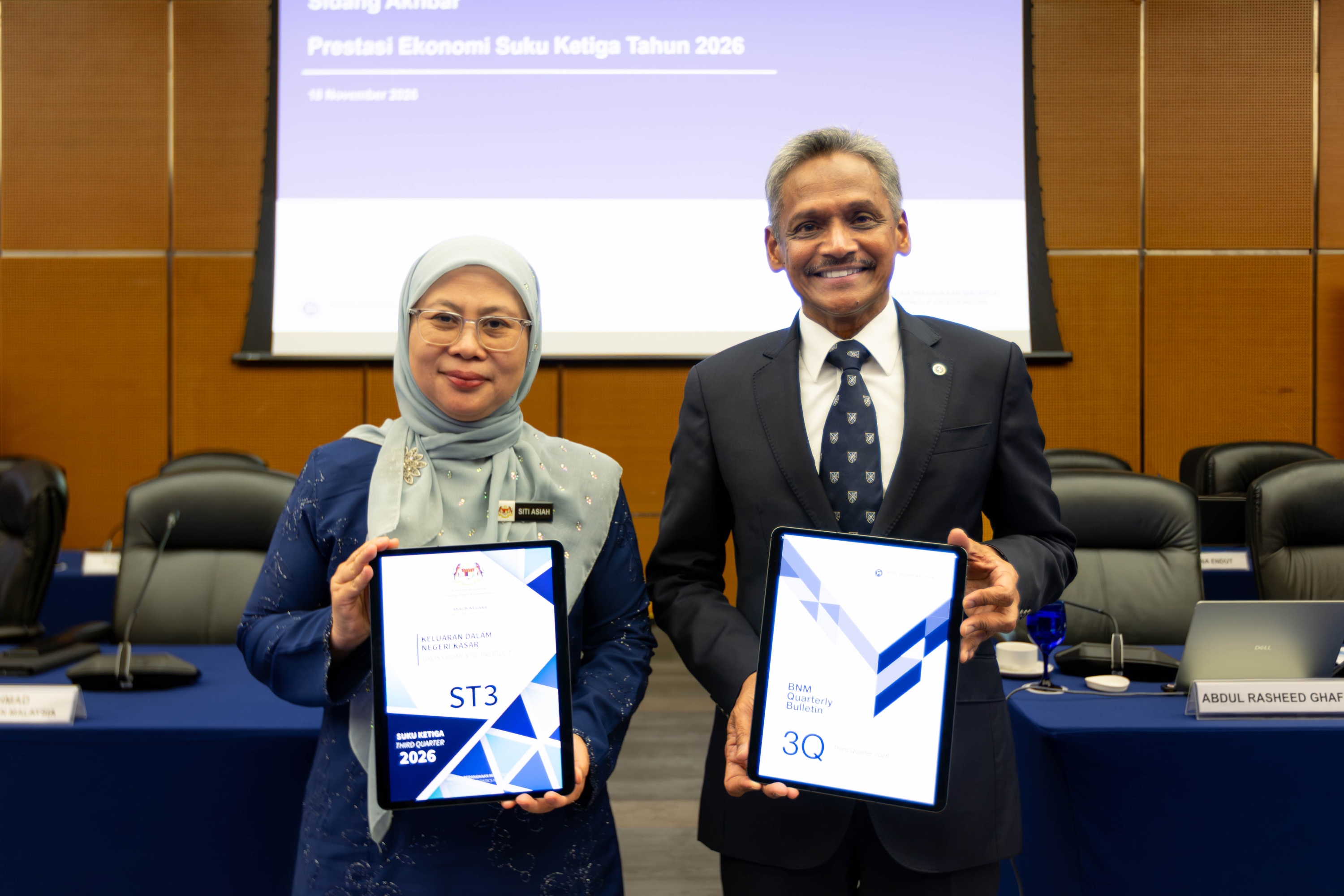

Governor with the Chief Statistician at the Q3 2026 GDP Press Conference
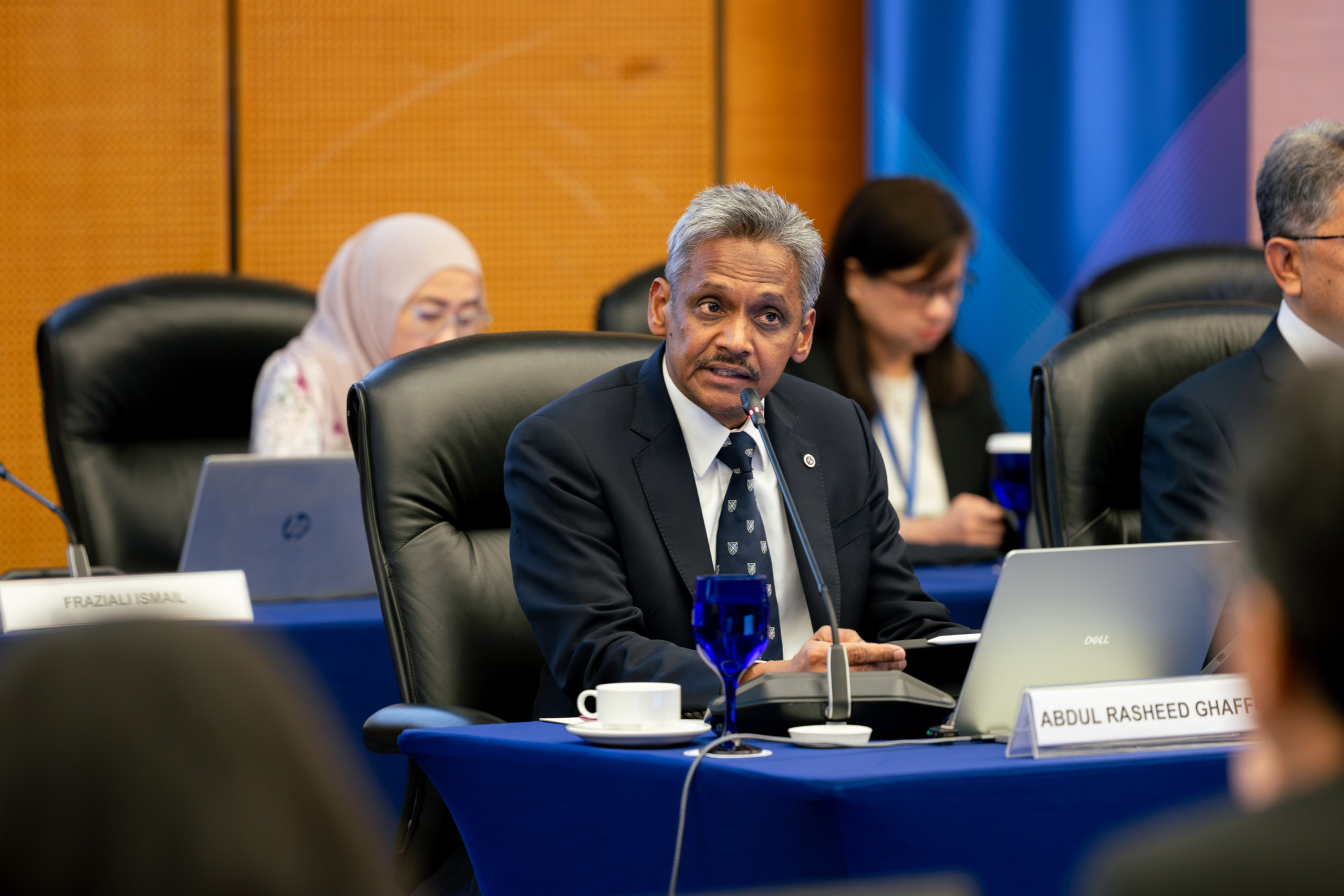
Governor at the Q3 2026 GDP Press Conference
Governor at the Q3 2026 GDP Press Conference
Bank Negara Malaysia
18 November 2026
© Bank Negara Malaysia, 2026. All rights reserved.
