Speeches & Interviews
Filter by year
Filter by speaker
Search title in Speeches
Filter by year
Filter by speaker
Keynote Address by Governor Abdul Rasheed Ghaffour
at Sasana Symposium 2026
Sasana Kijang | 28 July 2026
As I reflected on this year’s theme, ‘Reforms for Resilience’, it brought to mind a plant that grows along the East coast of Malaysia called the Gelam tree. It does not look particularly ‘glam’ or striking as a tree. But what makes it remarkable is its ability to thrive in harsh conditions – acidic peat, stagnant water and even wildfires. Rather than resisting its external environment, it adapts to it. It does so by continually shedding its bark, keeping itself in a constant state of renewal.
Structural reforms play a similar role. They enable renewal, peeling away outdated practices and inefficiencies so that the economy remains resilient in a changing world.
We find ourselves at an important juncture. Around the world, several forces are shaping the economic landscape. Geopolitical fragmentation is altering trade and investment flows. Artificial intelligence is changing how value is created. Climate-related disruptions are becoming more frequent and costly.
In such an environment, monetary policy remains an important line of defence. At its current setting, our monetary policy stance remains in line with the domestic growth and inflation outlook. And as uncertainty persists and energy prices remain high, we will play our part in keeping price stability firmly in sight.
Yet monetary policy alone has its limits. As a demand management tool, it cannot directly address the underlying forces shaping an economy.
This is where structural reforms come in. At their core, structural reforms are an investment in the economy's future. They make the economy more productive, competitive and resilient. They address challenges early, before they become entrenched weaknesses that are harder and more costly to overcome.
Reforms have long been a defining feature of Malaysia's development journey. At key moments in our history, we have responded to change not with complacency, but with action and conviction – from laying the foundations of a newly independent nation to developing our capital markets and industrial base. In the aftermath of the Asian Financial Crisis, we strengthened the institutions and regulatory safeguards that continue to serve as the bedrock of our financial sector resilience today.
Yet every phase of development brings a new set of challenges.
By the mid-2010s, signs of strain began to emerge. Investment growth had slowed and competition across the region was intensifying. We started to outgrow some of the policies that had served us well in the past.
The world around us also started to change. Global integration gave way to a more fragmented and uncertain landscape. When the pandemic struck, it reinforced that urgency. It exposed vulnerabilities, accelerated structural shifts and served as a powerful reminder that resilience is rarely forged during a crisis, but built steadily in the years beforehand.
As the country’s central bank, Bank Negara Malaysia has played our part by preserving the macroeconomic stability that allowed reforms to take hold. Low and stable inflation, a sound financial system and orderly financial markets have helped create the conditions conducive for economic transformation.
And we will continue to do so. Looking ahead, the medium-term outlook remains favourable. Growth is expected to stay firm, while inflation remains manageable. We will continue to do what is needed to maintain price stability in a manner that supports sustainable economic growth.
This preserves the window of opportunity for Malaysia's ongoing reforms to progress forward. And for their full benefits to be realised over time.
Where we are now
It is in this exact environment of macroeconomic stability that Malaysia embarked on yet a new phase of reforms. They were guided by a simple objective: to strengthen Malaysia's foundations for the next phase of growth. It became clear that we needed to prepare not only for the challenges we could foresee, but also for a future that was constantly evolving.
We focused on two areas:
First, building productive capacity.
Investment is the engine of a growing economy. Better jobs, higher incomes and rising living standards are only possible when an economy continues to invest in its future. The challenge for us from the outset was not to simply attract more investment, but to attract the right kind of investment.
Investment that raises productivity and competitiveness. That brings in new technologies, creates better jobs and enables it to generate greater value than before.
This thinking has shaped much of Malaysia’s investment agenda in recent years. Through the National Investment Aspirations framework, Malaysia set a clear direction for attracting investments that generate greater value for the economy. Our national masterplans have placed Malaysia on a stronger growth trajectory by channelling capital towards higher value-added industries.
We are already seeing encouraging signs of progress.
Over the last two years alone, Malaysia has approved RM815 billion in investments, equivalent to almost half of our annual GDP. That figure is significant not only because of its size. It tells us something about the future economy we are building.
Much of this is being directed towards advanced manufacturing, semiconductors, digital technologies and modern machinery – areas that are critical to expanding the economy’s productive potential. But their significance goes beyond adding capacity. They are reshaping the very makeup of the economy. Laying the foundations for higher incomes and stronger growth in the years ahead.
The second priority was rebuilding fiscal capacity.
Sustainable public finances sit at the heart of almost every national priority.
Better education. Stronger healthcare. Modern infrastructure. Climate resilience. Effective social protection. None of these are possible without the fiscal capacity to support them.
This required difficult but necessary decisions. Across the last few years, measures such as targeted diesel subsidies, broader subsidy reforms and selected tax adjustments were phased in, giving households and businesses time to adapt.
Taken together, these efforts were aimed at strengthening the Government's ability to respond when shocks occur, while ensuring sufficient resources remain available to invest in Malaysia's long-term priorities.
The reality is that to build a stronger future, we must first strengthen our public finances. There are no shortcuts to this. It needs to be earned through consistency and prudent choices over time.
This is why the Public Finance and Fiscal Responsibility Act marked an important milestone.
It embedded greater discipline, transparency and accountability into the management of public finances. More importantly, it established an institutional anchor to ensure responsible fiscal management that endures beyond any single administration.
And the results are beginning to show. Since 2020, Malaysia's fiscal deficit has narrowed from 6.2% of GDP to 3.7% in 2025. This has helped rebuild policy space at a time when demand on public resources continue to increase.
The work, of course, is far from over. But what’s important is that the Government now has more capacity to respond when it matters most.
And these moments are becoming increasingly frequent. In recent years, the global economy has been hit by a relentless series of overlapping shocks – from military conflicts, supply disruptions to geopolitical fractures.
Through it all, Malaysia has held its course.
Last year, the economy expanded by 5.2%, inflation remained contained and the ringgit was the region’s best-performing currency. This year, despite the energy supply shock, we remain well on track to grow by 4% to 5% – likely towards the upper end of the range – with manageable inflation.
Let me be clear: none of this has happened by chance. We made difficult choices early, through carefully designed and sequenced reforms, to strengthen our foundations and position Malaysia for the future.
The recent response from investors offers a timely example.
Last week, Malaysia successfully tapped the international capital market by offering a USD1.5 billion Global Sukuk.
The response was exceptionally strong, with demand reaching nearly five times the amount offered. Investors were not only willing to commit capital to Malaysia. They were willing to do so on very favourable terms, with record low spreads.
It was a clear vote of confidence in Malaysia's economic fundamentals, our reform agenda and our commitment to sound economic management.
Where we must go
Ladies and gentlemen, let us step back for a moment and consider what this means for Malaysia’s future.
Recent reforms have left Malaysia on firmer footing.
What comes next? For many Malaysians, the question is straightforward: How will this improve the lives of themselves and their families?
History shows us that Malaysia's greatest periods of progress have often coincided with moments of profound change in the global economy.
Malaysia’s first great economic ascent in modern times took place during a major reordering of the global economy. Following the Plaza Accord agreement, a sharp appreciation of the Yen prompted companies to relocate to lower-cost destinations across Asia. Malaysia was well-positioned to benefit. What followed was a period of rapid industrialisation, surging exports and expanding employment that marked the debut of the Malayan ‘tiger cub’ economy.
The rules of competitiveness have changed since then. The advantages that once drove Malaysia's growth are no longer enough. And once again, we find ourselves at an important crossroads.
The Gelam tree reminds us of something important. Resilience is not about preserving things exactly as they are. It is about continually renewing our ability to adapt and seize new opportunities as circumstances evolve.
In charting the future, these are some anchors we must be guided by:
First, it is to ensure growth cascades down.
Headline figures show clearly the macro progress made since the start of our efforts. But we also recognise that for many Malaysians, the cost of living and income inequality remain real concerns. The priority now is to ensure that economic growth is not only reflected in our statistics but felt at the dinner table. That has always been the ultimate purpose of these reforms.
The most direct way for growth to be felt is through better jobs. Jobs that create more value. Jobs that pay more.
For many years, low-cost, low-skilled labour kept us competitive. But a productivity-driven economy requires firms to compete through innovation, technology and capability. Not simply cost.
As Malaysia moves up the value chain, we must create more high-skilled, high-productivity opportunities in industries of the future. Advanced manufacturing. Emerging technologies. Research and development. These are the jobs that will drive stronger incomes and power Malaysia's next stage of growth.
We are already seeing encouraging signs. The share of high-skilled employment has increased from 27.5% in 2019 to 30.1% in 2025. This progress may seem gradual, but structural shifts in the labour market rarely happen overnight. Creating higher-skilled jobs at scale takes time.
The good news is that the pipeline is growing. The RM815 billion in investment projects I spoke about earlier could create close to 245,000 jobs if fully realised. A sizeable number of them are expected to be higher skilled roles.
Yet creating jobs is only half the equation. Malaysians must also have the skills to step into them. At present, more than two thirds of Malaysians continue to be employed in low skilled or mid-skilled roles.
As technology and AI reshape industries, the days of learning a skill once and relying on it for a lifetime are over. Workers will need opportunities to continuously upskill and reskill throughout their careers.
Digital fluency will become increasingly important. Not simply using technology, but understanding it. Working with data. Adapting as technologies evolve.
This requires a collective effort. Employers, education providers, training institutions, and policymakers must work more closely together to ensure skills development keeps pace with the needs of the economy.
Preparing the next generation must begin early. Initiatives under the 13th Malaysia Plan to expand TVET and strengthen STEM, digital literacy and AI education will help ensure young Malaysians are ready to thrive in higher-value industries.
For these skills to result in better outcomes, they will have to go hand in hand with a labour market that rewards rising skills and productivity with higher pay.
That starts with ensuring that work is rewarded fairly.
Successive minimum wage increases, as part of ongoing labour market reforms, have strengthened wage floors and supported income growth, particularly among lower-income workers. A strong wage floor remains an important safeguard.
But as the economy becomes more productive, our ambition must be greater. Work should not only enable Malaysians to earn above a minimum threshold, but a pathway to a reasonable standard of living and upward mobility. This requires institutions that help workers move into better opportunities, support skills development and align education outcomes more closely with the needs of the industry.
A stronger labour market needs to be paired with a more coherent approach to social protection. Financial assistance, skills development and access to employment opportunities should reinforce one another. Only then can we move beyond addressing immediate needs to tackling the underlying causes of vulnerability.
Second, the next phase of Malaysia's growth must be about moving from value extraction to value creation and retention.
The investment momentum we see today is encouraging. But its true value lies in what it leaves behind.
Do local firms become more capable? Do workers gain new skills? Do technologies diffuse more widely across the economy? Does productivity improve over time?
These are the questions that matter. This is why activities such as innovation, research and development, design and advanced engineering are becoming increasingly important. They create value that is harder to replicate and generate benefits that extend well beyond a single investment cycle.
The development of domestic firms is also critical. The greater the participation of Malaysian firms in high-value activities, the more widely the benefits of growth can be shared. Doing so will require stronger firms. Firms that automate. Firms that build deeper ties with global supply chains and have access to the financing needed to grow and compete.
We are already moving in the right direction. Programmes like SemiconStart are helping local start-ups access the capital, cutting-edge tools and global expertise needed to shape Malaysia's digital future.
These efforts may still be at an early stage. But they point to the kind of ecosystem we are trying to build. One where new investment translates into stronger domestic capabilities over time.
The objective is therefore not simply to bring investment into Malaysia. It is to ensure that investment leaves something behind. From deeper capabilities to new technologies. And ultimately, better opportunities for Malaysians.
Historically, much of Malaysia’s growth has been supported by the resources we could extract. Valuable but, ultimately, finite resources. Our next chapter must increasingly depend on what we can create. Innovation, technology and the talent of our people. Assets that we can build and compound across generations.
We must also remember that some of Malaysia’s most valuable assets cannot be measured solely in economic terms. We are one of the world's seventeen most biodiverse nations. This natural wealth is every bit as precious as our economic wealth. Future growth therefore must be sustainable in every sense of the word.
Third, everyone, and every institution, has a role to play.
At the start of my remarks, I spoke about how the reforms undertaken after the Asian Financial Crisis laid the foundations for the resilient financial system we have today.
Those efforts have proven their worth. When subsequent crises struck, from the global financial crisis to the pandemic, our financial system remained a key pillar of strength. It continued to finance households and businesses, helping the economy absorb the shocks and recover more quickly.
But building a stronger financial system is never a finished task. As Malaysia enters its next phase of development, our financial system must evolve alongside it.
Not simply to become a larger financial sector, but a better one. One guided by values. One that creates meaningful impact and acts with responsibility.
Allow me to share my vision for the future of our financial sector—and how Bank Negara Malaysia's upcoming Financial Sector Blueprint 2027–2030 will help bring that aspiration to life.
The first aspiration is finance for a more resilient society.
We live in a world of more frequent and more severe climate shocks. At the same time, today's energy challenges have added urgency to the transition towards a more sustainable future. Preparing for both will require significant investment in the years ahead.
Finance has a critical role to play. The task ahead is to unlock its full potential.
The second aspiration is finance for a more prosperous society.
As Malaysia moves up the value chain, finance must remain firmly connected to the needs of the real economy.
Its role is simple. To channel capital towards productive investment. To support the growth of high-potential sectors. To help Malaysian firms innovate, scale and compete.
In this regard, Malaysia’s Islamic Finance ecosystem can be a powerful force of change. Its value-based approach reminds us that finance is not an end in itself. It is a means to create lasting value for society and the economy.
Ultimately, this goes back to our reform agenda: Creating better jobs. Stronger wages. Greater opportunities for Malaysians.
The third aspiration is to future-proof Malaysia's financial system.
The financial landscape is changing rapidly. New technologies. New business models. New risks.
Our regulatory and supervisory approaches must evolve alongside them. They must be responsive and proportionate. Calibrated to the size and risk of what we regulate. Not there to curtail innovation, but to help shape an environment where innovation can thrive without compromising the trust, resilience and stability the financial system depends on.
Finance can support this transition. But it cannot drive it alone.
The challenges that will shape our future competitiveness cut across many areas. No single institution, sector or policy can address them on its own. Progress will increasingly depend on how effectively we work together as a nation.
The way we pursue these goals must also evolve. The traditional model, where governments and regulators identify priorities and chart a linear path forward, is less suited to a world that is becoming more complex and fast-moving. Instead, progress will depend on our ability to harness the collective strengths of the broader ecosystem.
At Bank Negara Malaysia, this means moving towards a model of co-creation. Bringing together financial institutions, businesses, technology players and other stakeholders to solve shared challenges, develop new solutions, and create space for collaboration and healthy competition.
We have already seen what this approach can achieve. In climate finance. In innovation. And in financial market development. Through platforms such as the Joint Committee on Climate Change, the Regulatory Sandbox and the Financial Markets Committee, stakeholders have come together to shape a stronger financial ecosystem.
iTEKAD began in the same spirit. Bringing financial institutions together in support of underserved communities. Today, it has evolved into a broader platform for economic empowerment.
It has helped micro-entrepreneurs build businesses and improve livelihoods. It has expanded access to financial protection for previously underserved groups, including gig workers.
Later, we will launch iTEKAD Employment. It is a new initiative that aims to help those willing to work gain the skills, support and pathways needed to secure sustainable employment.
What has made all this possible is the willingness of financial institutions to look beyond individual mandates and work towards a common goal. I hope many more will come forward, so that together we can extend these opportunities to even more Malaysians.
Finally, we must stay ahead of the curve, not behind it.
The global economy is at an inflection point. Yet, too often, countries become consumed by solving yesterday’s problems while overlooking tomorrow’s opportunities. Every major transition creates possibilities for those prepared to recognise them.
Malaysia has been here before. We responded to the forces of globalisation, transformed our economy and moved up the development ladder. We stand where we are today because of the difficult choices we made in the past.
Today, we have the means to build on that progress. Growth remains steady and inflation is within expectations. We can afford to take the long view. As the country’s central bank, we continue to maintain a stable macroeconomic environment and resilient financial system. These are necessary precursors for reforms to progress.
Let me end by returning to the Gelam tree.
For generations, its bark was used by Malay shipbuilders to navigate uncertain seas. Fitted between wooden planks, it allowed ships to flex with the force of the waves rather than break against them.
That is what resilience looks like. Not resisting change, but adapting to it without losing our bearings.
In many ways Malaysia’s development story has been built on that same principle. Each generation has faced its own challenges. Each generation has had to make choices about how to respond to a changing world.
The reforms of recent years are part of that ongoing story.
They have strengthened our foundations helped prepare Malaysia for a future that will look very different from the past. Now comes the harder task.
Turning stronger foundations into stronger incomes. Turning investment into opportunity. Turning resilience into shared progress.
The next chapter of Malaysia’s story will not be determined by global events alone. It will be shaped by how we respond to them.
And if we continue to adapt, renew and invest in our future, what lies ahead is not set in stone but full of possibilities.
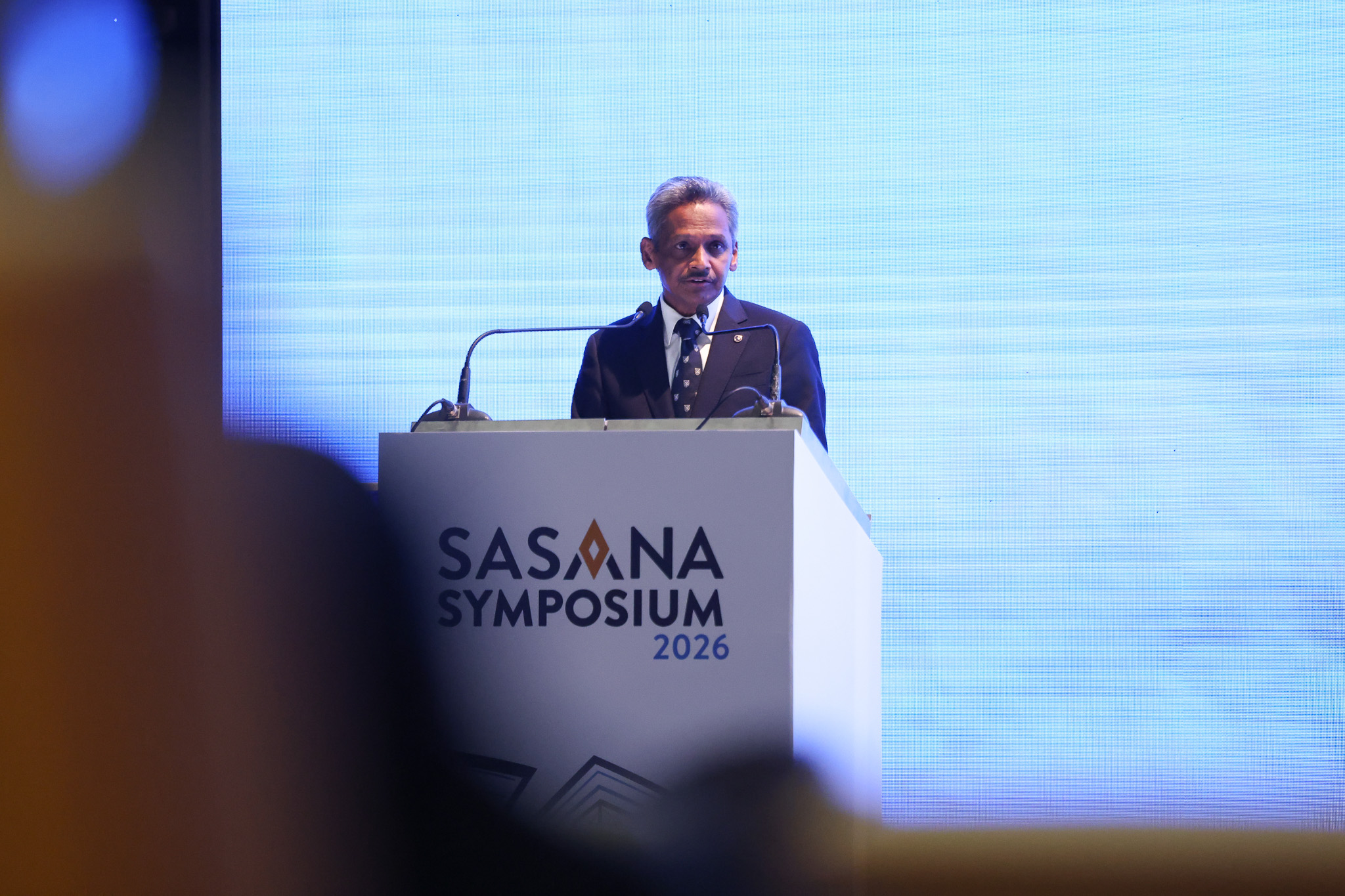
Dato’ Sri Abdul Rasheed Ghaffour, Bank Negara Malaysia Governor delivering his keynote address at the Sasana Symposium 2026
