

The First Series of Banknotes
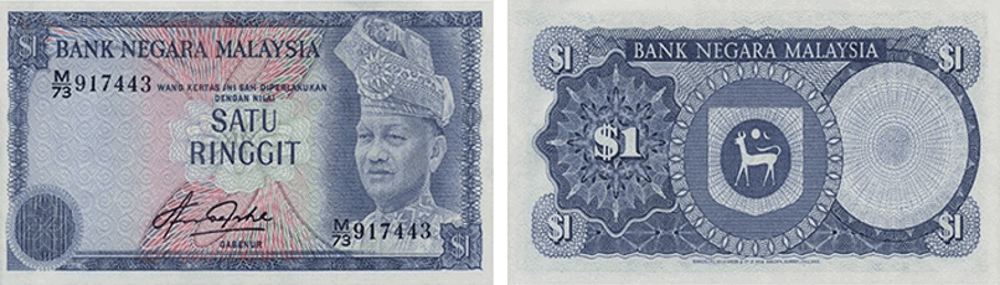
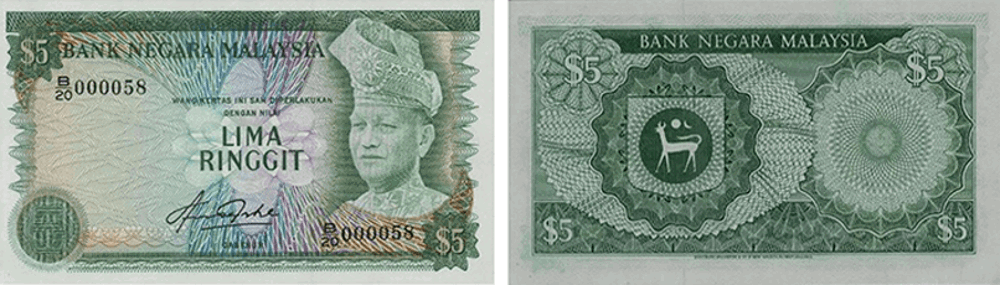
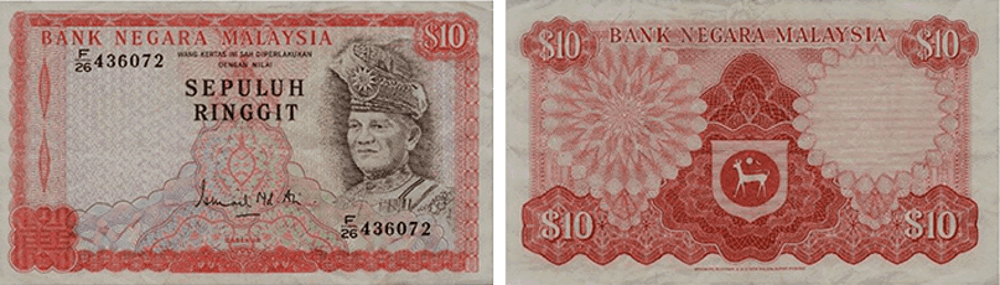
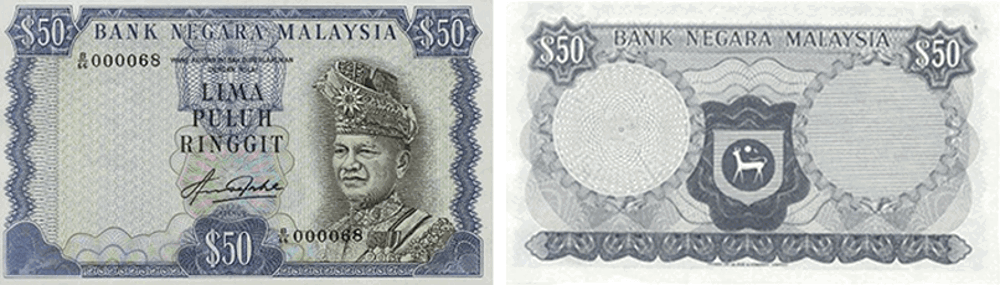
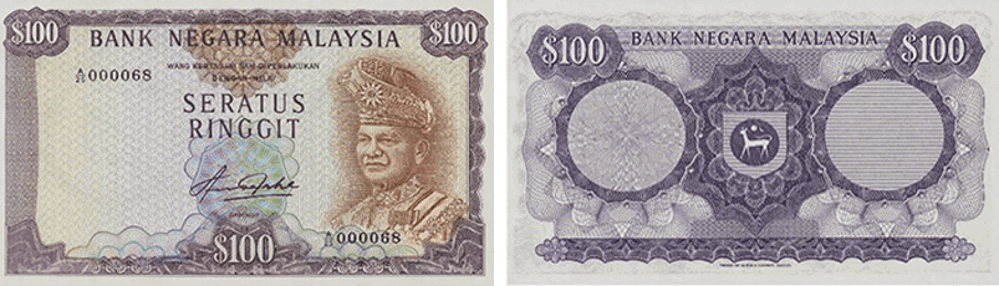
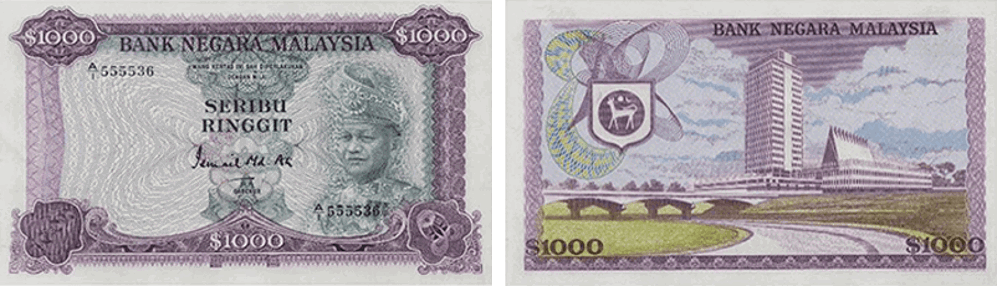
BNM began issuing currency notes in June 1967. These banknotes were in five denominations: $1, $5, $10, $50 and $100. A $1,000 denomination note was issued on 2 September 1968.
The basic design of these banknotes was common across all denominations. The obverse depicted a portrait of His Majesty the first Yang Di-Pertuan Agong, together with the words Bank Negara Malaysia’. The words legal tender’, the face value and the signature of Tun Ismail bin Mohamed Ali, the first Malaysian appointed as the Governor of BNM, appeared on the obverse of these banknotes. The reverse had the BNM logo, with a background of geometrical designs.
The banknotes’ security features included a tiger’s head watermark on the left and a security thread on the right.
With the official implementation of the new spelling system for Bahasa Melayu (the national language of Malaysia) on 16 August 1972, BNM began using the new spelling system in the printing of its banknotes, but retained the existing designs.
The changes in spelling were as follows:-
Currency Denomination | Old Spelling | New Spelling |
$1 to $1,000 | GABENUR | GABENOR (Governor) |
DI-PERLAKUKAN | DIPERLAKUKAN (tender) | |
$10 | SA-PULOH | SEPULUH (ten) |
$50 | LIMA PULOH | LIMA PULUH (fifty) |
$100 | SA-RATUS | SERATUS (one hundred) |
$1000 | SA-RIBU | SERIBU (one thousand) |
In early 1982, banknotes in denominations of $1, $5, $10, $50, $100 and $1000 were issued with the signatures of the third BNM Governor, Tan Sri Abdul Aziz bin Haji Taha. The other characteristics and patterns were the same as those of banknotes issued between 1967 and 1982.

Was this page helpful?
Help us improve by sharing your feedback.