
First Published in Economic & Monetary Review 2023
Malaysia’s ambition to become a high-productivity, high-income nation faces a significant hurdle: persistent structural issues in its labour market. Existing efforts to address these challenges, while commendable, may be insufficient. More decisive action is needed. Emerging and ongoing megatrends, as well as the implementation of various national strategic initiatives make the labour market reforms more urgent.
This article discusses the case for labour market reforms in Malaysia. It begins with an overview of the labour market landscape in Malaysia, contrasting between the pre- and post-COVID-19 period. Next, it highlights the key megatrends that will present both challenges and opportunities in the coming years. This article concludes with a discussion on the key structural policy reforms to address existing challenges and prepare the labour market for the future.
Part I: Labour market landscape in the pre- and post-COVID-19 period
The pandemic had caused significant disruptions to the labour market with the unemployment rate peaking at 5.1% in the second quarter of 2020. These effects were particularly acute for vulnerable segments of the economy, such as women and youth. Since containment measures were fully lifted in 2022, the Malaysian labour market has shown a steady recovery.
By end-2023, the unemployment rate had returned to its pre-pandemic (2015‒19 average) rate at 3.3%. In addition, the labour force participation rate has breached a historical high. This positive development has been driven mainly by a significant increase in participation rate for men. In part, this reflects the increased opportunity in location-based gig work, such as food delivery and e-hailing services. Meanwhile, women labour force participation rate has also surpassed pre-COVID-19 levels and continues to trend upwards, although the pace of increase was slower[1] compared to the men’s participation rate.
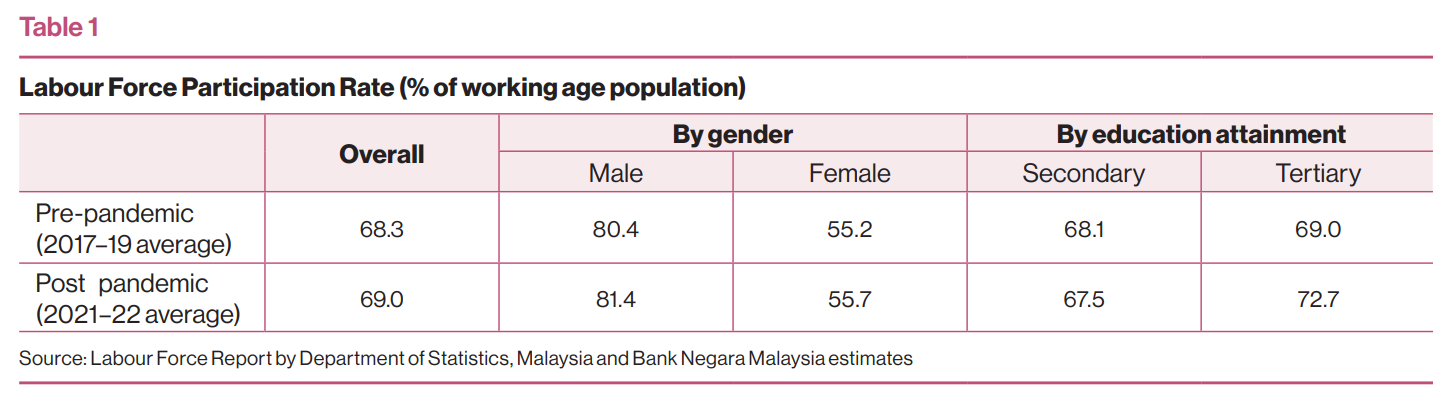
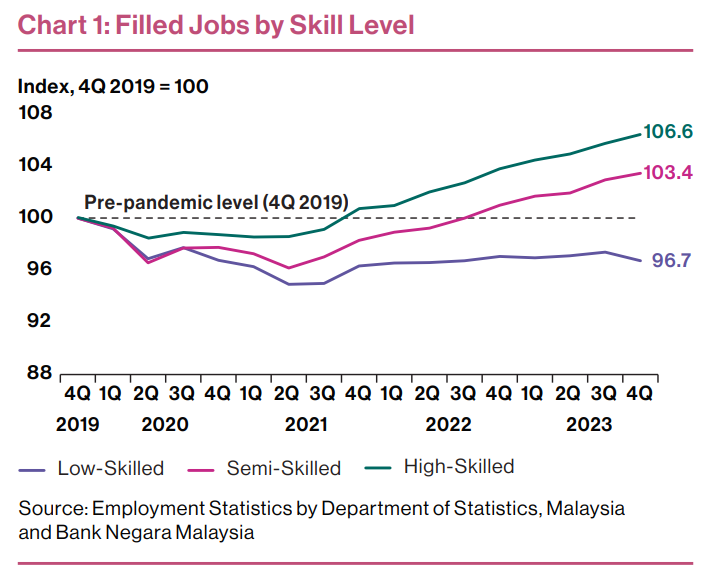
Of significance, there has been higher demand for high-skilled[2] workers post-COVID-19.[3] Between fourth quarter of 2019 and fourth quarter of 2023, the number of employed high-skilled workers has increased by 6.6% from 2.05 million persons to 2.19 million persons. Correspondingly, the share of high-skilled workers in employment has also inched higher since the pandemic (2021‒23 average: 24.9%; 2017‒19 average: 24.3%). This trend has been driven by the services sector, specifically in the wholesale and retail trade subsector. This can be attributed to rising demand for professionals in business and administration,[4] as more firms launch e-commerce platforms, use social media for marketing, explore data analytics for efficiency and adopt automation and digital systems.
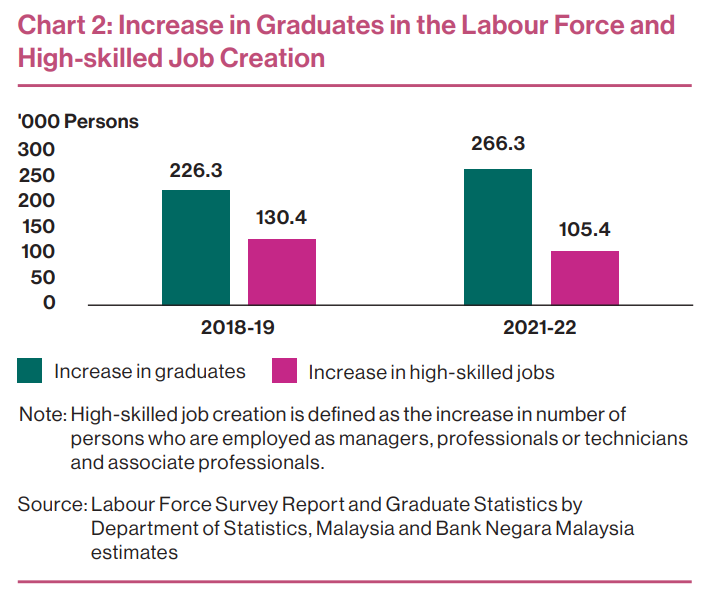
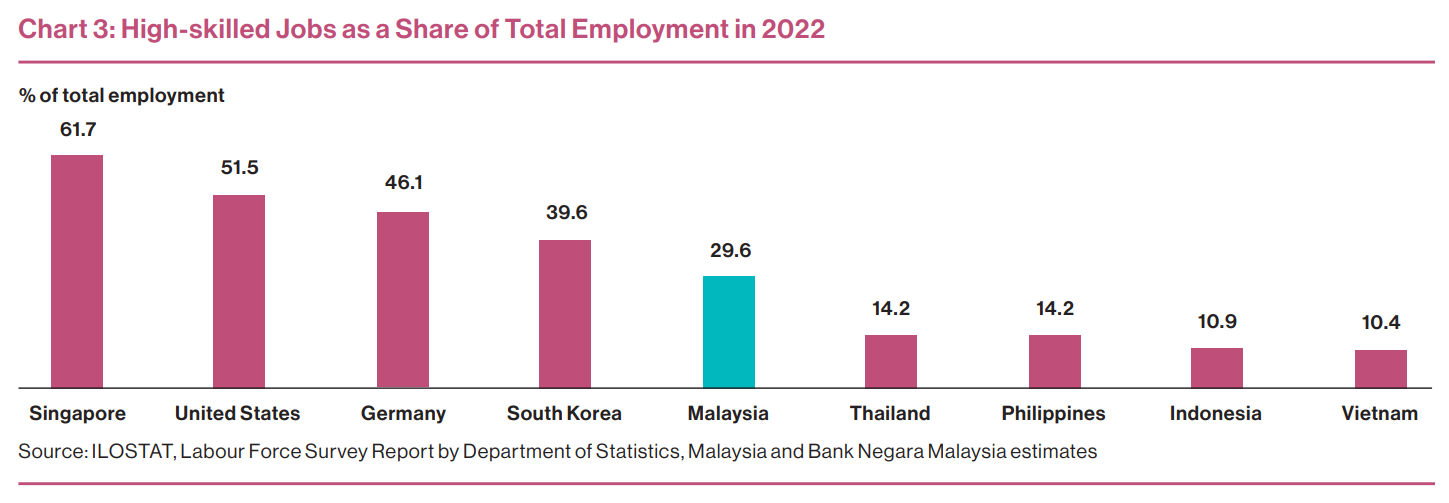
Despite the growing demand, the low creation of high-skilled jobs in Malaysia continues to persist. The pace of increase in high-skilled jobs still lags the average number of new graduates in the labour force. Between 2018 and 2019, new graduates in the labour force were about twice the increase in high-skilled jobs. This gap has widened post-pandemic (Chart 2). Malaysia also lags behind select advanced and regional economies in terms of share of high-skilled jobs (Chart 3).
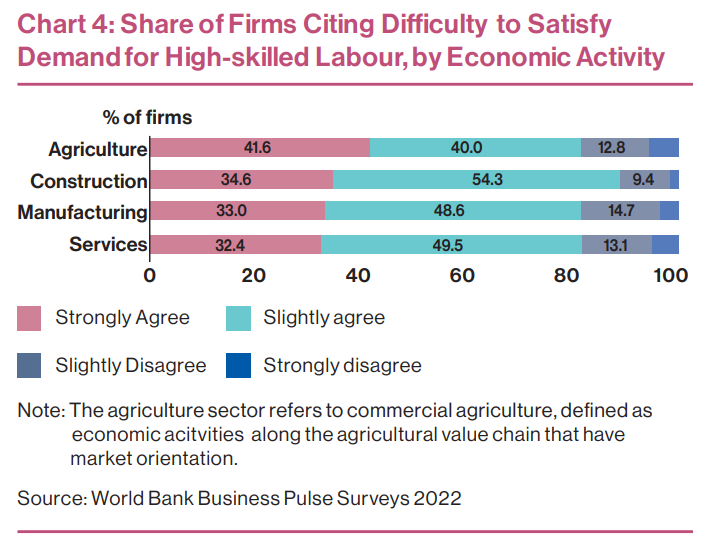
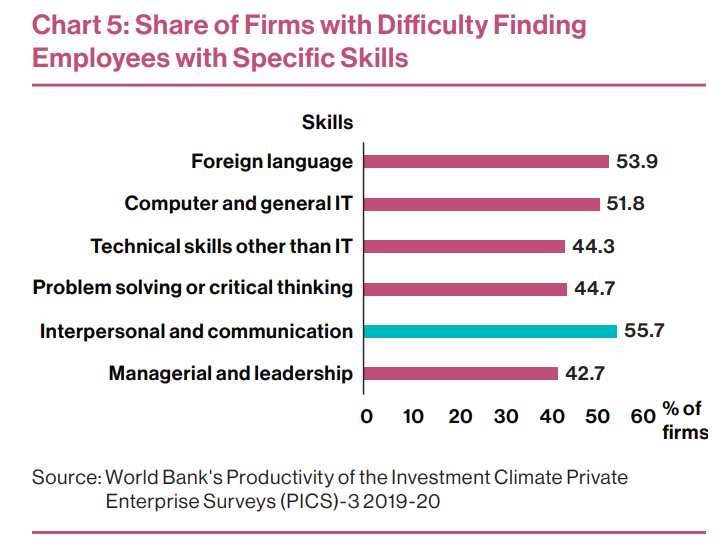
Of great concern, a large number of the existing pool of graduates is assessed to be unsuitable to take on the available high-skilled jobs. Firms continue to face difficulties in filling existing high-skilled jobs (Chart 4) across various sectors of the economy. This suggests mismatches in the area of study, or a lack of soft skills that are needed for the job, but not necessarily obtainable from formal education and academic qualifications (World Bank, 2023 ). For example, 55.7% of firms reported that they had difficulty finding employees with good interpersonal and communication skills (Chart 5).
Together, insufficient high-skilled job creation and skills mismatch have contributed to the prevalence of high skills-related underemployment (2021‒22 average: 38.4%; 2018‒19 average: 33.8%),[5] which refers to those with tertiary education but working in the semi-skilled and low-skilled categories. Overall, employment remains primarily concentrated in semi-skilled[6] segments post-COVID-19. More than 70% of the jobs in the agriculture, construction and manufacturing sectors are in the semi-skilled category.
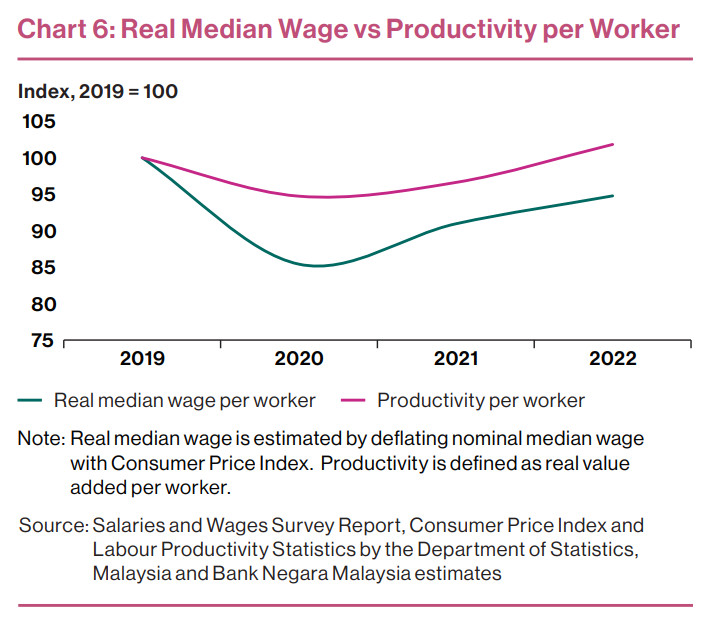
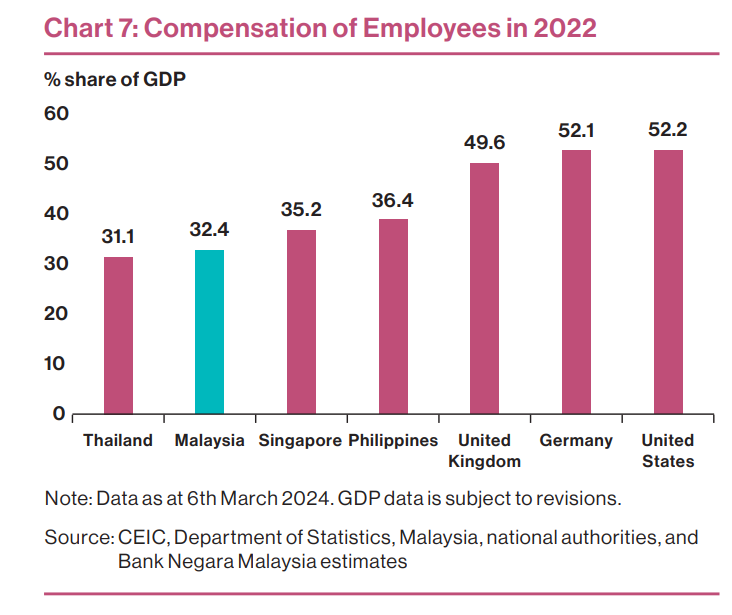
Since the pandemic, the real median wage per worker has lagged productivity growth (Chart 6). This significant productivity-wage gap is accounted mostly by the services sector. Furthermore, the compensation of employees share of income in Malaysia is much lower than in most advanced economies, suggesting that a relatively smaller share of the economic pie is going to workers (Chart 7).[7]
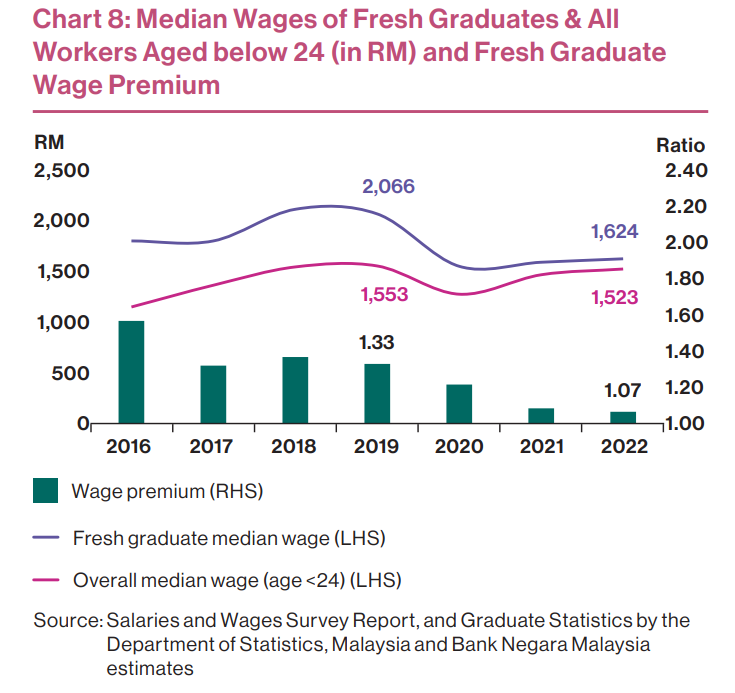
Developments relating to fresh graduates’[8] wages are even more worrisome. Post-pandemic, the median starting salary was more than 20% lower compared to the 2019 level (2019: RM 2,066; 2022: RM 1,624). This implies that the wage premium[9] for fresh graduates has declined sharply post-COVID-19 (Chart 8). This may partly reflect the existing high skill underemployment of graduates (discussed earlier), which has worsened the low bargaining power of workers.
Part II: Key megatrends affecting the labour market
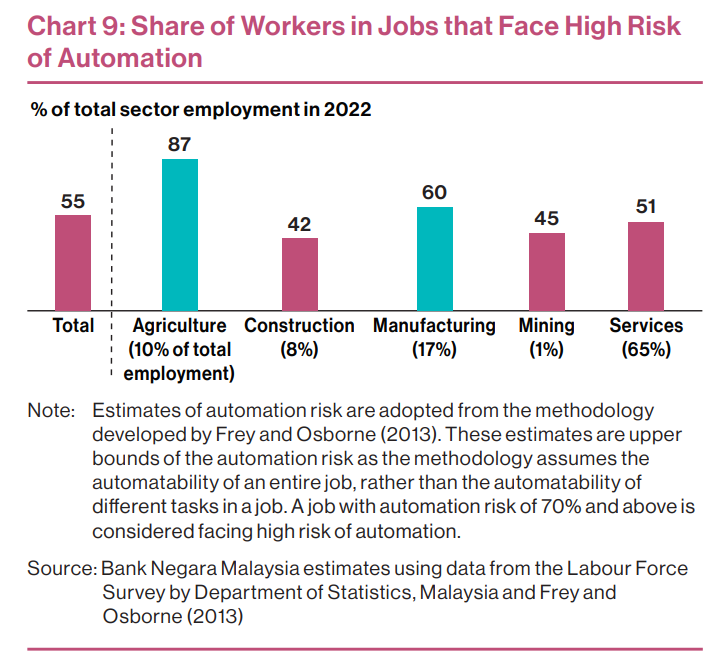
Several global and domestic key megatrends could disrupt and exacerbate some of the prevailing labour market issues in Malaysia. Technological advancement would transform the way people work – certain jobs will be eliminated or modified and new jobs could be created. In the short- and medium-term, greater adoption of automation and generative artificial intelligence (AI) could displace low-skilled jobs, and routine tasks at all skill levels. It is estimated that by 2030, automation could displace up to 4.5 million jobs in Malaysia (Mckinsey & Company, 2020). For Malaysia, the risk of displacement due to automation is highest in the agriculture and manufacturing sectors (Chart 9). Meanwhile, generative AI is expected to affect white collar knowledge workers who undertake tasks involving data analytics, pattern recognition and routine decision making (Mckinsey Global Institute, 2023).
Notwithstanding the potential job disruptions, technology advancement also has positive spillovers on jobs. A wide variety of high-skilled jobs that are complemented by AI[10] have a vast potential for productivity enhancements. Moreover, automation of repetitive tasks allows workers to focus on higher value tasks. New jobs, especially those that require highly specialised skills to manage technology and AI, will be created. New technologies also facilitate the rise of flexible working arrangements which encourage higher labour force participation, particularly among female, and promote greater labour mobility. These positive outcomes will result in higher income for the country.
A more recent megatrend is the reconfiguration of supply chains. The COVID-19 pandemic spurred firms to undergo ‘nearshoring’ or ‘reshoring’[11] to reduce their risks to supply chain disruptions (International Labour Organization, 2022). The impact of the shift in supply chains on the labour market is unclear for now and depends on a host of factors.[12] For exporting countries such as Malaysia, employment in the manufacturing sector will be impacted, especially low-skilled machine operators and technicians in low value-added and labour-intensive industries (Barcia de Mattos, Dasgupta, Jiang, Kucera, & Schiavone, 2020). These workers are most at risk of being displaced as they cannot easily transition to other jobs if firms move their production out at a massive scale.
As the world strives to decarbonise, Malaysian industries need to reduce the reliance on fossil fuels and improve energy efficiency to maintain trade competitiveness.[13] As polluting or carbon-intensive industries decline, the predominantly less-skilled workforce in these industries are likely to be unable to transition quickly into the green economy. In the US, empirical evidence shows that for non-green workers, transitioning into a green job is challenging as it requires a fundamentally different skillset (Bergant, Mano, & Shibata, 2022). On the other hand, there will be creation of high-skilled and highly specialised jobs to cater to the green economy.[14] Mid- to high-skilled jobs with adjacent skills and tasks will also be augmented.[15]
Socio-demographic changes will also shape the future of the labour market. Malaysia is rapidly ageing and is expected to be an aged society in about two decades from now.[16] This could lead to human capital constraints, as the prime working age population shrinks, and the old age dependency ratio doubles[17] in the next 30 years. If the majority of workforce remains employed in semi-skilled jobs with no accompanying rise in technological adoption, a shrinking workforce[18] that is not met through immigration, could lead to slower or even negative potential growth.
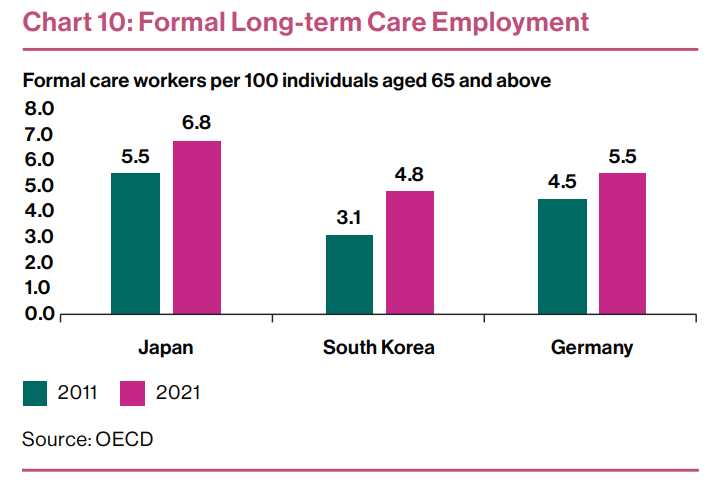
Conversely, an aging population could also lead to rising opportunities in the care economy, such as professionals in senior care centres and management of social services. Several aged, more advanced economies such as South Korea, Germany and Japan are already seeing rise in formal long-term care employment (Chart 10) (Jones, 2020; OECD, 2021). To capitalise on these opportunities, there are several key questions that policymakers will need to reflect on. What will the future of work look like in terms of occupations and skills? How can help be provided for workers to adapt to the ongoing economic shifts? And how can workers’ livelihoods be secured in this economic climate?
Firm-level Insights from Bank Negara Malaysia’s (BNM) Industrial Engagements
Technology as the key disruptive megatrend for future of work
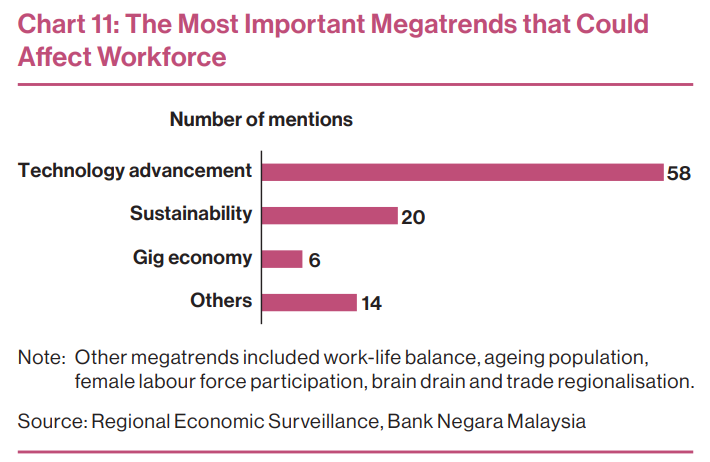
- Based on BNM’s industrial engagements,[19] more than half of the firms identified technological advancements (such as automation and AI) as the most important megatrend over the next three to five years (Chart 11).
- This was most prominent among the manufacturing, mainly in the E&E cluster, and services sectors.
- Meanwhile, sustainability was principally cited by firms across construction, agriculture and mining sectors – coincidentally some of the hard-to-abate industries.[20]
Mixed responses regarding the impact of megatrends on firms’ future demand for labour
- Overall, most firms either believed that megatrends could destroy jobs (43%) or have no impact (43%) on firms’ demand for workers in the next five years.
- Most firms that quoted job destructions were in the manufacturing sector, citing pivots away from labour-intensive and administrative tasks.
- For example, in E&E industry, AI and automated test equipment could replace the current manual inspection of final products by workers.
- However, many firms in the services sector anticipated no impact on a net basis. This was prominent in the hospitality and retail industries, where human interaction would remain crucial.
Proliferation of new roles and skillsets on demand following megatrends
- With technology cited as the key megatrend, firms anticipated rising demand for IT skills and digital literacy moving forward, resulting in the creation of new tech-related roles.
- For example, niche engineering professionals, programmers or technicians to operate advanced technology or software.
- Others cited the greater need for data analysts and data scientists for supply chain management and production optimisation in the logistics and manufacturing industries.
- Some firms expected higher demand for Environmental, Social and Governance (ESG) related roles, such as green building consultants (construction sector), carbon trading experts (mining sector) and more broadly, an in house corporate sustainability team.
Firms continued to rely on internal training curricula to prepare for the future of work
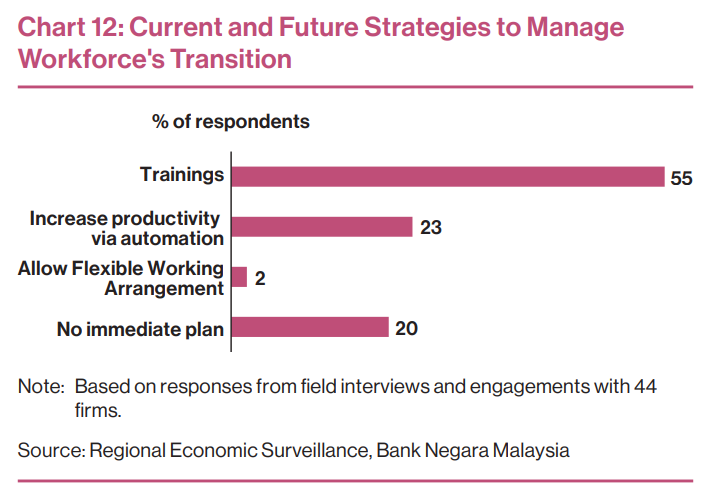
- In the transition towards new workforce needs, most firms would train staff to reskill or upskill so that they can be rotated to other positions if needed, thus minimising the risks of being displaced.
- Nevertheless, some firms (20%) have not embarked on any pivot strategy as they did not foresee immediate changes to the workforce due to the megatrends (Chart 12).
- In this regard, more can be done to assist firms in taking proactive measures to prepare for the future of work amid emerging megatrends, which may significantly impact firms’ future business operations and hiring strategies.
Part III: Labour market policy reforms
It is imperative to roll out reform measures carefully and strategically to tackle existing structural issues, and minimise transitory costs while maximising opportunities from the megatrends. This section discusses five key strategies that would facilitate the transition to an agile, resilient and future-ready workforce.
Strategy 1: Address skills mismatch in the labour market
One effective method to address skills mismatch is to promote greater collaboration between the Government, industry and academia in enhancing the quality of higher education syllabus and workforce training. In particular, the industry should be encouraged and provided the opportunities to play a greater role. This is as they are more up to date with the latest industry trends, technologies and products, as well as critical skills that workers should have to meet industry needs. These insights are crucial in revamping the higher education curriculum to produce graduates who not only have solid technical skills, but also strong cognitive and soft skills.
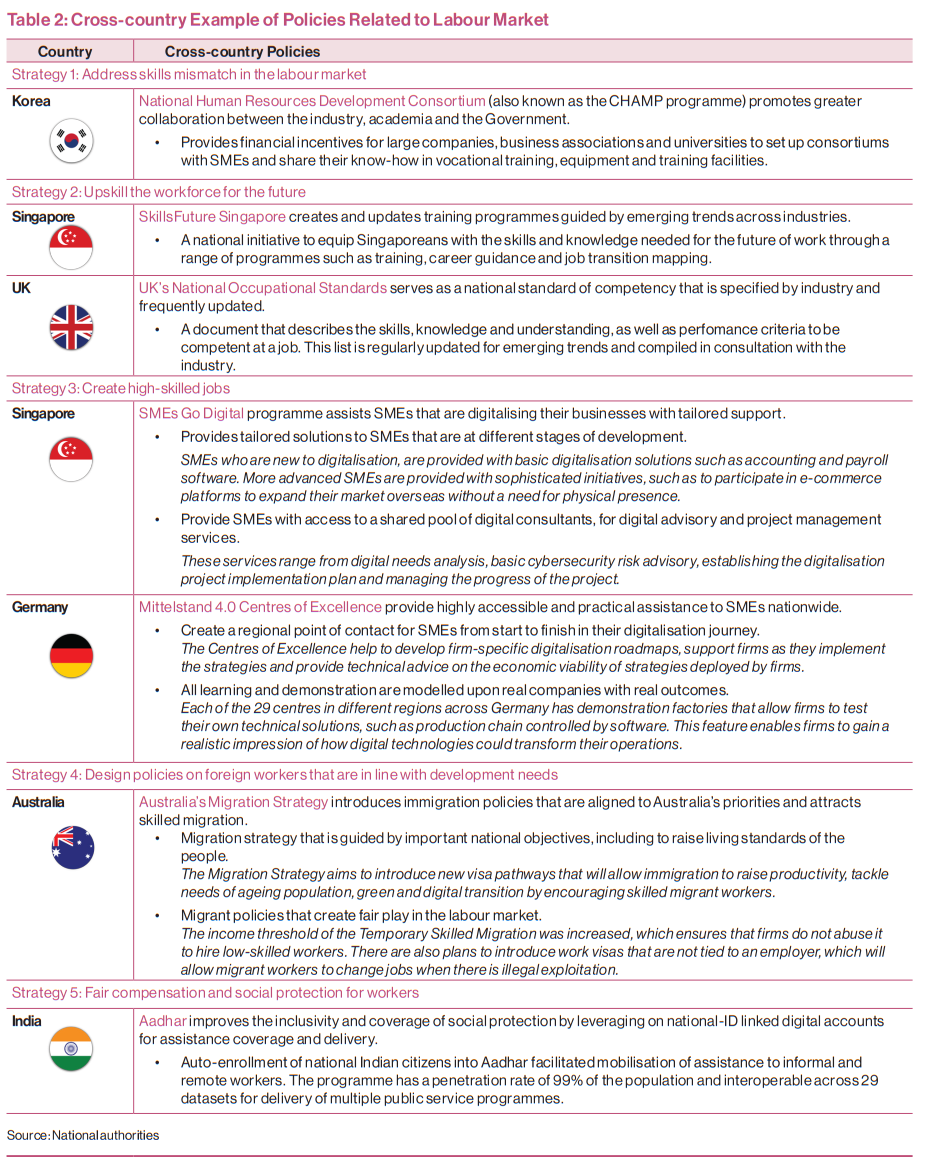
The Penang Skills Development Centre (PSDC), a tripartite training programme in the E&E industry in Malaysia which adopts a collaborative framework in workforce upskilling and reskilling, has proven effective[21] in raising the quality of training and productivity. Under this framework, the Government provides accreditation to training programmes and funding for selected PSDC initiatives; the industry identifies skills and learning outcomes to guide the content of training modules and workshops; and the academia collaborates with industry to reskill and train prospective workers for subsequent hiring. This model can be expanded and emulated across other sectors. Similarly, the Selangor Human Resource Development Centre (SHRDC) is another tripartite partnership model that focuses on developing talent for the Fourth Industrial Revolution (4IR). In this model, the training is provided by SHRDC directly to firms’ employees. There is also merit in encouraging more large firms to share their know-how with small and medium enterprises (SMEs). For instance, in South Korea, the National Human Resources Development Consortium provides financial incentives for large companies, business associations and universities to set up consortiums with SMEs and share their expertise in vocational training, equipment and training facilities (OECD, 2020).
While efforts are directed to developing the requisite training programmes, structured assessment framework should be in place to evaluate the effectiveness of the training initiatives. This allows policymakers to identify ineffective programmes, refine and improve existing ones as well as help design new programmes to address existing gaps (Dar, 2002).
Strategy 2: Upskill the workforce for the future
Given the ongoing economic shifts, upskilling policies should enable workers to pivot and adapt, and promote lifelong learning. Hence, a universal individual-centric training system could be established to ensure that every working age individual has access to training courses, even without formal attachment to an employer. This can complement an employer-centric training model, whereby the employer makes training decisions based on business needs. For example, Singapore’s SkillsFuture Credit, a subsidy provided to all Singaporeans aged 25 years and above, promotes lifelong learning by providing workers with easy access to training and education for all ages and stages of career, even during crisis periods.
Additionally, it is crucial to develop a data-driven approach to identify emerging skills and jobs to meet the rapidly-evolving economic needs. Analysis from advanced economies is also beneficial to anticipate the possible future disruptions in the domestic labour market. Such efforts are critical to guide shifts in training programmes to remain relevant, and individuals in identifying the skills or knowledge to acquire to meet the emerging economic needs. Currently, there are existing initiatives which outline the types of skills and knowledge required for different occupations.[22] These initiatives are useful but can be further harmonised through the creation of a single national competency standards for skills and knowledge. More importantly, the competency standards need to be continuously updated to include emerging industry needs.
Strategy 3: Create high-skilled jobs
In the short-term, it is critical to encourage more widespread adoption of automation and digitalisation among firms, especially SMEs. Efforts to automate and digitalise will directly create more high-skilled jobs such as technicians and IT professionals. Furthermore, greater technological adoption will increase firms’ productivity and promote their ability to pivot to higher value-added activities, which will in turn create more high-skilled, high-paying jobs.
Looking at a longer time horizon, it is also key to attract high quality investments for a more sustainable and organic creation of high-skilled jobs. The government has introduced various blueprints, including the New Investment Policy (NIP), New Industrial Master Plan (NIMP) 2030[23] and National Energy Transition Roadmap (NETR). These national strategic initiatives will promote economic activities with higher complexity and higher productivity. However, to realise this, the implementation of these national plans would need to be expedited, with proper monitoring and periodic reviews, to ensure the desired outcomes are achieved.
Strategy 4: Design policies on foreign workers that are in line with development needs
In the short-term, the key challenge is to reduce the country’s dependency on low-skilled, low-wage foreign workers. The government intends to address this issue with the Multi-Tier Levy Mechanism (MTLM).[24] However, this transition needs to be orderly to avoid significant disruptions in business activities. Hence, complementary measures to support firms to automate and adopt technology are crucial during the transition period.
In the medium- to long-term, a comprehensive rethink of immigration policies is necessary to ensure that Malaysia’s labour needs can be fulfilled. The lack of certain high-skilled professionals such as mining engineers and ICT professionals may constrain expansion in select high growth areas. A targeted policy to attract high-skilled foreign talent to fill gaps in sectors where the supply of high-skilled workers is insufficient may be required. Parallel to this, the creation of more high-skilled jobs (as elaborated in Strategy 3), and transfer of knowledge from foreign to local workers will safeguard the interest of local workers.
Strategy 5: Fair compensation and social protection for workers
Efforts are also needed to ensure that workers are paid fairly commensurate with their productivity. Existing wage policies would need to be enhanced. In its current form, the minimum wage is unable to lift wages of high-skilled workers, especially graduates, amid issues of mismatches and underemployment. Exploring a differentiated minimum wage by skill level, which could accord graduates a higher minimum wage, may be an option. For instance, in Slovakia, jobs are divided into six categories by skill level, with higher minimum wages paid to workers in higher-skilled jobs.
An enhancement of the current Productivity-Linked Wage System (PLWS), which aims to establish a closer link between wages and productivity, is equally important. Given the low take-up rate,[25] adoption of a star-rating system[26] to PLWS employers could improve the attractiveness of the policy and promote competition among firms. In addition, frequent and consistent reviews must be conducted to ensure that the measure between wage and productivity is up to date with industry benchmarks and standards of living.
The Progressive Wage Model (PWM), which will begin its pilot in June 2024, could also help lift wages. It helps address market failures by nudging private firms to pay more competitively, including for fresh graduates by encouraging higher entry-level pay. Nevertheless, this solution is only temporary. To increase wages sustainably in the long-term, long standing issues affecting labour demand and supply need to be addressed. This includes creation of high-skilled jobs and addressing skills mismatch, as elaborated in the earlier strategies.
Finally, the current social protection framework should consider new forms of employment in the informal sector, such as flexible work arrangements and gig work. Universal registration into social insurance schemes, such as those under EPF and SOCSO, can be a precursor for greater penetration of social insurance in the informal sector.
Lessons from the Global Economy on Labour Market Reforms
As Malaysia embarks on a journey of labour market reforms, it will be important for policymakers to also learn from the best practices of other countries. This will help ensure the success of the reforms
Conclusion
The COVID-19 experience has shown that labour market dislocations can accelerate within a short period of time, especially during economic shocks. At the same time, emerging megatrends are both augmenting and disrupting the labour market. The negative impact of these forces on employment and income prospects can be more severe given the prevailing structural impediments in the labour market.
Conversely, the megatrends also present various opportunities for workers, including raising their income, provided the structural issues are addressed. As such, this calls for an urgent need for a comprehensive reform to Malaysia’s labour market. The policy strategies should aim to reduce skills mismatch, upskill the workforce for the future, create high skilled jobs, reduce dependency on low-skill, low-wage foreign workers, attract foreign high-skilled talent and ultimately, lift wages and income of the people.
The way forward is to expedite the implementation of national strategic initiatives that will provide high-paying employment opportunities. Concurrently, initiatives that enhance workforce resilience are needed given the highly challenging economic prospects. Inevitably, there will be short-term transitory costs and challenges. Recognising this, measures can be put in place to assist those who are affected or vulnerable to changes arising from the labour market reforms.
References
Australian Government Treasury (2023). Our Roadmap for a dynamic and inclusive labour market. Retrieved from Australian Government Treasury: https://treasury.gov.au/sites/default/files/2023-09/p2023-447996-09-roadmap.pdf
Bank Negara Malaysia. (2022). Navigating Malaysia’s Economic Transition towards a Decarbonised Future. Retrieved from the 2022 Economic and Monetary Review.
Bank Negara Malaysia. (2018). Are Malaysian Workers Paid Fairly?: An Assessment of Productivity and Equity. Retrieved from the 2018 Annual Report.
Barcia de Mattos, F., Dasgupta, S., Jiang, X., Kucera, D., & Schiavone, A. F. (2020). Robotics and reshoring: employment implications for developing countries. Geneva: International Labour Organization.
Bergant, K., Mano, R., & Shibata, I. (2022). From Polluting to Green Jobs: A Seamless Transition in the U.S.? International Monetary Fund.
Dar, A. (2002). Impact Evaluation : Techniques for Evaluating Active Labor Market Programs. World Bank. International Labour Organization. (2022). World Employment and Social Outlook: Trends 2022. Geneva:
International Labour Office. Jones, K. (2020). These countries are aging the fastest - here’s what it will mean. Retrieved from World Economic Forum : https://www.weforum.org/agenda/2020/02/ageing-global-population/
Jones, K. (2020). These countries are aging the fastest - here’s what it will mean. Retrieved from World Economic Forum : https://www.weforum.org/agenda/2020/02/ageing-global-population/
Kochhar, R. (2023). Which U.S. Workers Are More Exposed to AI on Their Jobs? Pew Research Centre.
Mckinsey & Company. (2020). Automation and adaptability: How Malaysia can navigate the future of work.Mckinsey & Company.
Mckinsey Global Institute. (2023). The Economic Potential of Generative AI.McKinsey & Company.
OECD. (2020). “Why adult learning is important for Korean SMEs?”, in Enhancing Training Opportunities in SMEs in Korea. Paris:OECD Publishing.
OECD. (2021). Long-term care workforce: caring for the ageing population with dignity. OECD.
Penang2030. (8 June, 2022). PSDC’s School Leavers Programme Paves the Way for a Successful Career. Retrieved from penang2030.com: https://penang2030.com/2022/06/psdcs-school-leavers-programme-paves-the-way-for-a successful-career/#:~:text=According%20to%20the%20graduate%20tracer,studies%20simultaneously%20with%20 their%20employment.
Webb, M. (2019). The Impact of Artificial Intelligence on the Labor Market. Available at SSRN 3482150.
World Bank. (2023 ). Raising the Tide, Lifting All Boats, Malaysia Economic Monitor (October). Kuala Lumpur: World Bank.
Notes
[1] This can be attributed to the higher representation of women in consumer-facing and contact-intensive services sectors, as well as the increased need for provision of family and childcare during the pandemic.
[2] Defined as jobs that require tertiary education (Source: Malaysia Standard Classification of Occupations (MASCO) 2020)
[3] The analysis on employment by skill and sector presented in this article is based on Employment Statistics published by the Department of Statistics, Malaysia, which provides the necessary data dimensions for the assessment
[4] Examples include finance, human resource development, public relations, marketing, sales, information and communication technology, and management.
[5] Refers to underemployed persons out of total employed persons with tertiary education
[6] Defined as jobs that require secondary or post-secondary education (Malaysian Skills Certificate level 1 and level 2 or equivalent) (Source: MASCO 2020)
[7] For further details, please refer to the box article ‘Are Malaysian Workers Paid Fairly?: An Assessment of Productivity and Equity’ in Bank Negara Malaysia’s Annual Report 2018.
[8] Proxied by graduates aged below 24 years old
[9] Calculated as the ratio of the median wage of graduates below 24 years old over the median wage for all workers below 24 years old
[10] Jobs with a high exposure to AI include lawyers, accountants and auditors (Kochhar, 2023; Webb, 2019).
[11] ‘Nearshoring’ is when companies relocate production closer to the final customer to better accommodate contingencies from unexpected shocks. ‘Reshoring’ means relocation to primary domestic production sites, especially in manufacturing.
[12] The factors include, among others, availability of productivity-enhancing technology in origin countries, protection of intellectual property, quality control, market access and minimisation of risks (Barcia de Mattos, Dasgupta, Jiang, Kucera, & Schiavone, 2020).
[13] For further details, please refer to the box article ‘Navigating Malaysia’s Economic Transition towards a Decarbonised Future’ in Bank Negara Malaysia’s Economic and Monetary Review 2022.
[14] Examples include climate change specialists.
[15] Examples include architects equipped with green building knowledge and skillsets.
[16] Based on the United Nations (UN), ‘ageing population’ is defined as when 7% of the population is aged ≥65 years old, while ‘aged population’ is when the share is 14%. Using UN data, Malaysia reached ageing population in 2021 and expected to reach aged population in 2042 (Source: United Nations, World Bank, Department of Statistics, Malaysia).
[17] Estimated as the ratio of the number of elderly people at an age when they are generally economically inactive (i.e. aged 65 and over), compared to the number of people of working age (i.e. 15-64 years old).
[18] Malaysia’s working age population share (age 15-64) is forecasted to decline from 70% in 2023 to 66% of the total population by 2050. This reflects larger old age population due to increasing longevity, amid declining fertility rate (Source: United Nations).
[19] Based on field interviews and engagements with 61 firms. Most were in the services (51%) and manufacturing (33%) sectors, and non-SMEs (87%).
[20] Industries where decarbonisation is difficult due to heavy reliance on fossil fuel as feedstock and for energy in their manufacturing processes. Based on the International Energy Agency (IEA), the three criteria to identify hard-to-abate sectors are: (i) long-lived capital assets; (ii) high temperature requirements for their production process; and (iii) trade considerations. For Malaysia, the sectors identified comprise oil and gas, palm oil, construction, steel, cement and chemicals industries.
[21] In 2021, 41% of PSDC graduates successfully secured employment (Penang2030, 2022).
[22] For example, SOCSO’s Malaysian Skills, Occupation, Qualification and Competencies (MSOC) taxonomy for different occupations, HRD Corp’s Industrial Skills Framework for select industries and National Skills Registry by TalentCorp.
[23] Under the NIMP, Mission 2 outlines specific strategies to provide practical and firm-specific end-to-end automation and digitalisation solutions that are aligned to the state of readiness and needs of SMEs.
[24] As mentioned in Budget 2024, a multi-tiered levy system for foreign workers will be implemented to reduce dependency on foreign workers. Higher levy rates will be imposed for employers with a large foreign workforce.
[25] Currently, the PLWS system covers only around 6 million workers, or about 39% of total employment.
[26] Firms would be rated on various criteria, including having best and fair practices in wage-setting. This will serve as a signal to prospective employees and help attract workers.
CSS
